


This post contains affiliate links. If you book through them, I earn a small commission at no extra cost to you. I only recommend services I’d use myself.
Here’s the question I get most from people planning ski holidays from the UK to Bulgaria: when should I actually go? Not “what’s open” – they’ve already Googled that. They want to know when it’s worth it. When the snow is good, the gondola queue isn’t a crisis, and the prices don’t make you regret not going to Austria.
The honest answer: there’s no one perfect month. It depends entirely on whether you’re chasing powder, avoiding UK half-term chaos, travelling with young children, or just trying to make the most of a budget ski break. I’ve worked as a holiday rep in Bulgaria, spent time across all three main resorts, and watched enough skiers make and regret their booking decisions to give you the version your travel agent won’t.
For context on the resorts themselves before we get into timing, my full Bulgaria ski resorts guide breaks down Bansko, Borovets and Pamporovo side by side. And if it’s your first time visiting Bulgaria at all, the Bulgaria travel guide covers everything from visas to getting around.
- Best snow: January to early March
- Fewest crowds: January (outside school holidays) and March
- Best value: Early December or March
- Avoid if you hate queues: UK half-term week (mid-February)
- Best for beginners and families: January or early February at Pamporovo or Borovets
- Longest season: Bansko, typically early December to mid-April
Bulgaria Ski Season: When Each Resort Opens and Closes
Official dates for the 2026/27 season will be confirmed by resort operators in autumn 2026. Based on recent seasons, here’s what to plan around:
| Resort | Season opens | Season closes | Altitude range | Snowmaking coverage |
|---|---|---|---|---|
| Bansko | Early December | Mid-April | 900m – 2,560m | 90%+ of pistes |
| Borovets | Mid-December | Early April | 1,350m – 2,560m | Most main runs |
| Pamporovo | Late December | Early April | 1,450m – 1,926m | Key runs covered |
Bansko has the longest Bulgaria ski season and the highest top elevation. That combination is why it holds snow better than the other two – particularly late in March and into April. Pamporovo’s season is the shortest, and its lower altitude means it’s more vulnerable to warm spells, especially late in the season.
Best Month by Traveller Type
Before we go month by month, here’s the short version for different types of skier:
| Traveller type | Best month(s) | Best resort | Why |
|---|---|---|---|
| Beginner skiers | January, early February | Borovets or Pamporovo | Good snow, ski school availability, no half-term pressure |
| Family ski holidays | January | Pamporovo or Bansko | Manageable queues, fair prices, sunshine at Pamporovo |
| Budget travellers | March or early December | Any | Off-peak accommodation, last-minute deals, quieter lifts |
| Best snow conditions | Late January to mid-February | Bansko | Peak snowpack, full piste coverage, consistent conditions |
| Avoiding crowds | January (weekdays) or March | Any | Half-term gone, Sofia day-trippers at a minimum |
| Late-season skiers | March to mid-April | Bansko only | Only resort with altitude to sustain conditions into April |
Month by Month: What Skiing in Bulgaria Actually Looks Like
December – Festive Atmosphere, Risky Snow
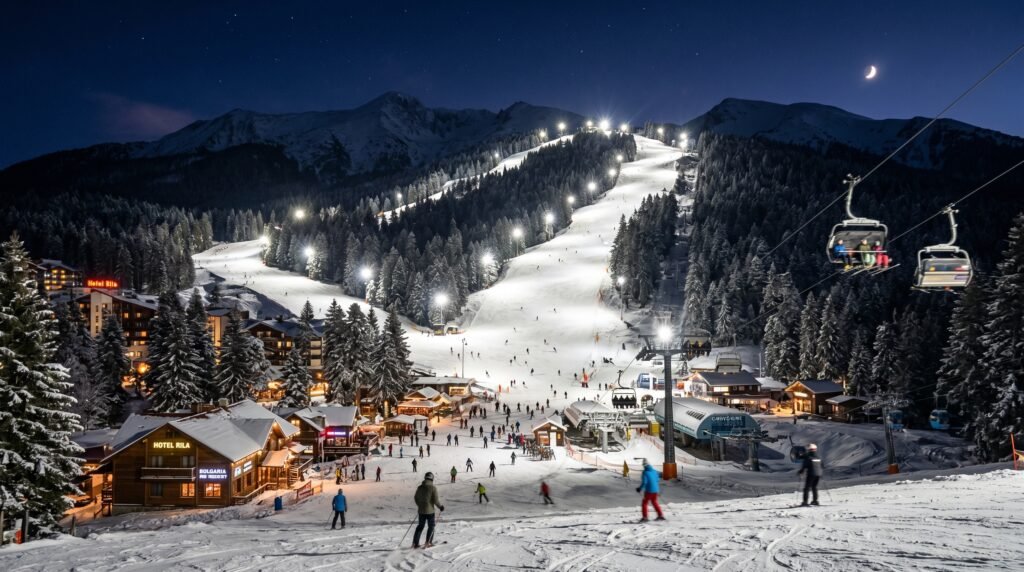
Early December is a gamble. The lifts open, but natural snowfall on the lower runs is often patchy. Bansko’s snowmaking covers more than 90% of its pistes, which helps maintain skiable conditions even in thin-snow years – but artificial snow on a handful of groomed runs isn’t the same as a proper January mountain. Some December seasons are excellent. Some see skiers shuffling around a single corridor waiting for a cold snap that hasn’t arrived yet.
That said, December isn’t without its appeal. The festive atmosphere in Bansko’s old town around Christmas and New Year is genuinely nice. Prices are lower than in February. Flights from UK airports to Sofia can be surprisingly cheap in early December, which makes the gamble tempting. If you’re going, aim for the second half of the month – conditions improve once overnight temperatures consistently drop below freezing. Go in knowing the lower pistes may be limited, and you won’t be disappointed.
January – The Month Experienced Skiers Quietly Book
January is the answer for most people, and it’s the one experienced Bulgaria regulars tend to keep to themselves. Snow is properly established across all three resorts. Gondola lift queues at Bansko are manageable. Hotels aren’t at peak demand. You get real winter conditions without the half-term price and crowd premium. Bansko hosted the FIS Snowboard World Cup in January 2026 – which tells you something about the conditions the mountain can deliver this time of year.
One thing most guides don’t mention: weekends at Bansko are always busier than weekdays, in any month. Sofia day-trippers come up on Saturdays, and the gondola queue reflects that. If you arrive on a Saturday in January and think you’ve made a terrible mistake, give it until Monday – it’ll feel like a completely different mountain. If you have any flexibility in your travel dates, midweek arrivals are always the smarter move.
January is also the best month to book ski school slots. Bulgaria’s ski schools are genuinely good – the instructors all speak English, the teaching is methodical, and costs are a fraction of what you’d pay in France or Switzerland. In February, the better instructors book up fast during half-term. In January, you can often find places at short notice. I’ve watched complete beginners ski confidently by day four at Borovets. The wide, forgiving beginner runs there are underrated for first-timers who don’t want to feel intimidated from the start.
February – Great Snow, Complicated Queues
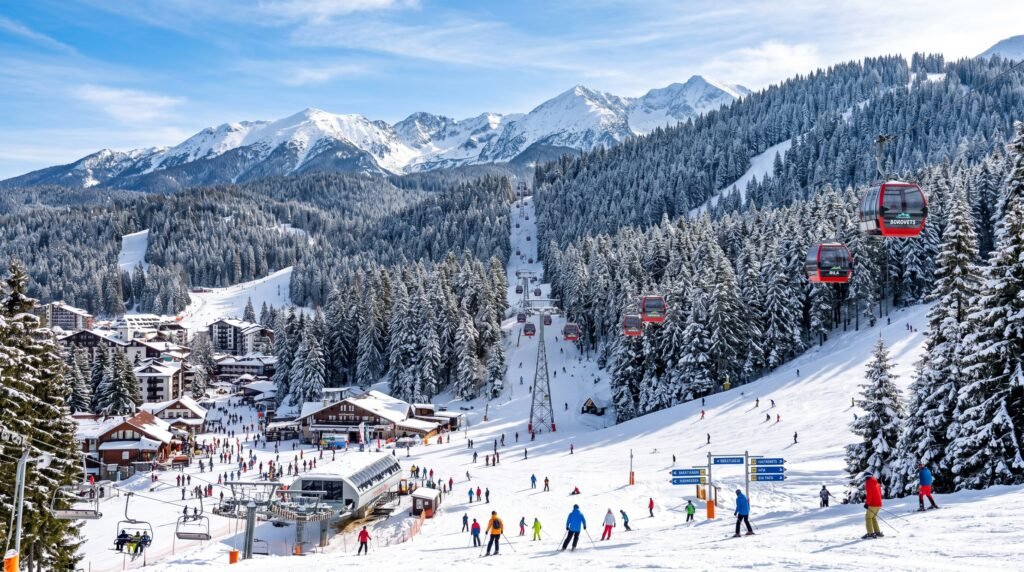
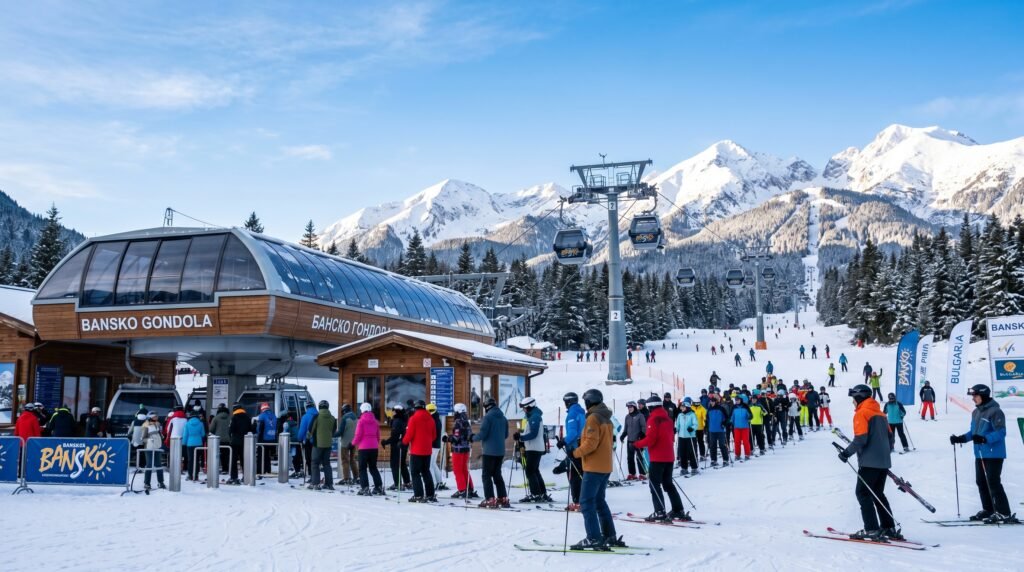
The snow in February is usually as good as it gets in Bulgaria. The problem is that UK, Romanian, and Turkish school half-terms all land in roughly the same window – typically the third week of February. During that specific week, gondola lift queues at Bansko have been reported at 90 minutes to three hours in the morning. Three hours. Standing in the cold before you’ve skied a single run. That’s the February half-term experience at Bansko for a meaningful chunk of visitors.
One thing that often surprises people: ski pass prices don’t change much by season at Bansko. A one-day adult lift pass runs around €52 regardless of when you visit. What changes is accommodation – February half-term hotels cost noticeably more than January equivalents, sometimes significantly so. The lifts are the same price; the room is not.
If February is your only option, it’s still worth going. The snow justifies it. But build in early starts – the gondola opens at 08:30 and the queue multiplies fast after 9am once ski schools bring their groups. Ask your hotel about VIP or fast-track lift pass options before you book; some include gondola priority access in their packages and not all advertise it. The week before UK half-term or the week after is noticeably quieter – if you can shift your dates by even a week, do it.
March – The One I’d Recommend Most
March is the sweet spot, and it’s underbooked. The half-term crowds have gone. Prices on accommodation drop. The mountain feels like it’s yours in a way it doesn’t in February. And here’s the thing most people don’t expect: the upper runs at Bansko in early March can be in better condition than the lower runs were back in December. The altitude at 2,560m keeps overnight temperatures low enough for snowmaking to keep working, and you get that perfect groomed morning surface that people pay Alpine prices for elsewhere.
By late March, the lower runs at Borovets and Pamporovo start softening in the afternoon sun. That’s the trade-off. But Bansko’s top elevation holds up well throughout the month, and the town still has enough life to make the après-ski worthwhile. For intermediate to confident skiers who want good conditions without the fuss, early-to-mid March is probably the best booking window of the entire Bulgaria ski season.
April – Easter Skiing and Late Season
Bansko sometimes runs to mid-April, which is impressive for a Balkan resort. By this point you’re in spring skiing territory – warm midday sun, slushy lower runs in the afternoons, gradually closing lifts. Easter skiing in Bulgaria is a niche within a niche. If Easter falls early in April, Bansko may still have two or three weeks of skiing left. The slopes are quieter than at any other point in the season, prices are at their lowest, and mornings can offer genuinely good conditions before the sun gets to work on the snow.
Borovets and Pamporovo will likely be closed by Easter. This is a Bansko-only play, and it’s best suited to experienced skiers who know what late-season conditions mean and aren’t relying on a full open mountain.
Which Resort Is Best for Each Month?
| Resort | Best months | Avoid | Best for |
|---|---|---|---|
| Bansko | Jan, Feb, March | Half-term week specifically | All levels, après-ski, longest season |
| Borovets | Jan, Feb | Late March onwards | Beginners, groups, closest to Sofia |
| Pamporovo | Jan, early Feb | March onwards (shorter season) | Families, first-timers, 68+ sunny days per season |
One practical note on Borovets: it’s the closest resort to Sofia Airport – around 90 minutes by road. If you want to combine a day in Sofia with your ski trip, or if you’re arriving late and want a shorter transfer, Borovets is the logical choice. It’s a compact resort and the terrain is limited compared to Bansko, but for beginners and families on a short break it does the job well.
Is Bulgaria Better Than Austria or Italy for Skiing?
It depends what you’re looking for, and being honest about that matters.
Bulgaria wins clearly on price. A week’s ski holiday in Bansko – flights, hotel, ski pass, lessons, equipment hire and evening meals – typically costs significantly less than an equivalent week in the Austrian Tirol or the Italian Dolomites. Lift passes are cheaper. Accommodation is cheaper. Food and drinks in resort are cheaper. For budget travellers, first-timers who don’t want to commit large sums to a sport they might not enjoy, or groups trying to stretch a holiday budget, Bulgaria makes a strong practical case.
Bulgaria also wins on accessibility from the UK. Sofia Airport has direct flights from most major UK airports, typically 3 to 3.5 hours. You’re not adding an extra hour and a half over the Alps to get to resort.
Where Bulgaria loses: terrain and variety. Bansko has 75km of marked runs. The Austrian Ski Welt has over 280km. The Dolomiti Superski area covers more than 1,200km across multiple linked resorts. If you’re an advanced skier looking for challenges across a big connected ski area, Bulgaria will feel limited after a few days. The same is true for off-piste options – the terrain exists, but it’s nowhere near the scale or infrastructure of the major Alpine resorts.
Snow reliability is also more consistent in the high-altitude Alpine resorts, though Bansko’s snowmaking and top elevation at 2,560m mitigate this considerably. Italy’s South Tyrol and Austria’s Arlberg region sit at altitudes where snow is almost guaranteed in January and February. Bulgaria in a bad snow year depends more heavily on snowmaking.
The honest summary: Bulgaria is excellent for beginners, family ski holidays, budget-first trips, and anyone who wants a proper ski week without spending Alps money. It’s not the right choice for experienced skiers who want technical terrain, big off-piste options, or the feeling of a world-class interconnected ski area. Both things can be true at once.
UK Half-Term and Easter 2027 – Plan Around These
| Holiday period | Approximate dates 2027 | Impact on Bulgarian resorts |
|---|---|---|
| February half-term | Mid-February (varies by council) | Highest demand, worst gondola queues, peak accommodation prices |
| Easter 2027 | Easter Sunday 13 April; most schools break late March – mid-April | Late season — Bansko may still be open; Borovets and Pamporovo likely closed |
Always check your specific local authority – English councils vary by a week or more, and Scottish half-terms often fall on completely different dates. That one-week difference can mean the gap between walking onto the gondola and queuing for an hour in the cold.
How to Beat the Gondola Queue at Bansko
The gondola is the single thing that splits opinion on Bansko. Arrive at the wrong time in the wrong week and it defines your trip in a negative way. These are the things that actually make a difference:
Be at the gondola by 08:30. That’s when it opens. The queue multiplies fast once ski schools bring their groups, typically from 09:00 onwards. If you’re not there at opening during a busy week, you’re waiting.
Ask about VIP lift pass access before you book. Some hotels include fast-track gondola access in their packages. Not all advertise it. Ask specifically – it changes the entire morning experience during peak weeks.
Take a taxi to the upper gondola station. Around €10 per person to bypass the base queue entirely. Many ski schools also arrange minibus transfers to the upper station, often included in the lesson package. Worth confirming when you book lessons.
Pre-book ski hire and ski school in advance. In February especially, equipment hire and instructor slots fill up fast. Book ski rental in Bansko and ski lessons in Borovets before you travel rather than sorting it on arrival. And when the lesson ends, read my guide on tipping ski instructors in Bulgaria – it’s one of those things nobody tells you until the awkward moment arrives.
Ski weekdays, not weekends. This applies every month of the season. Sofia day-trippers come up at weekends and the gondola queue on a Saturday morning looks nothing like a Tuesday. If you arrive mid-week, you’ll have a noticeably better first impression of the resort.
Getting to the Resorts from Sofia Airport
Almost all ski holidays to Bulgaria fly into Sofia Airport. Wizz Air, Ryanair and British Airways all run direct routes from multiple UK airports, with flight times of around 3 to 3.5 hours. Transfer times from Sofia Airport to the resorts vary:
Borovets is the closest at around 90 minutes by road. Bansko is approximately 2 hours in normal conditions, though winter weather and traffic can add time. Pamporovo is the furthest south at around 3 hours.
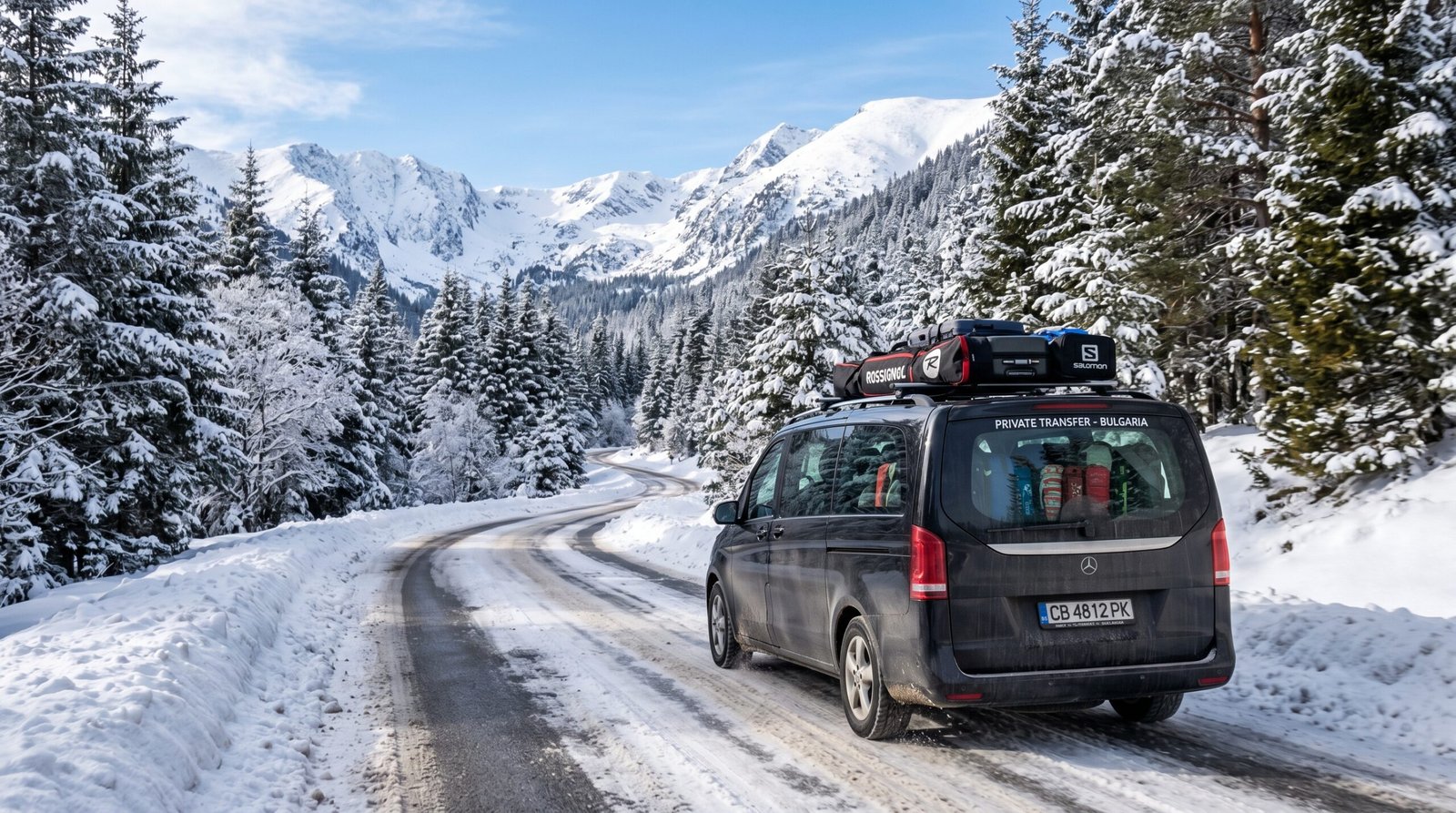
A private transfer is the simplest option when you’re arriving with ski bags and potentially tired children. Book through GetTransfer and you’ll have a driver waiting at arrivals with your name on a board – fixed price, no negotiation, no standing around.
If you’d rather drive and have the flexibility, AutoEurope handles car hire from Sofia Airport reliably. Read my guide on whether you actually need a car for a Bansko ski holiday first – the answer depends on your itinerary, and winter mountain road conditions catch people off guard more than you’d expect.
Frequently Asked Questions
Is Bulgaria good for skiing in December?
It can be, but early December is a risk. Natural snow on the lower runs is unreliable, and while Bansko’s snowmaking covers over 90% of its pistes, artificial snow on a limited number of runs isn’t the same as a full January mountain. The festive atmosphere in Bansko’s old town around Christmas is genuinely nice, and prices are among the lowest of the season. If you’re going in December, aim for the second half of the month when temperatures have dropped more consistently. Go with realistic expectations on piste coverage and you probably won’t be disappointed — but January and February offer a more reliable experience.
Is January or February better for skiing in Bulgaria?
January is better for most people. February has marginally better snowpack, but UK, Romanian and Turkish school half-terms all converge in the same window — typically the third week of February — and gondola queues at Bansko can reach two to three hours during that period. January offers excellent conditions with far less pressure on lifts, better ski school availability, and lower accommodation prices. The ski pass price is roughly the same (around €52 per day at Bansko); what changes is the hotel rate and queue length. If February is your only option, avoid the half-term week specifically and look at the weeks either side.
Is March too late to ski in Bulgaria?
Not at Bansko. The resort’s top elevation at 2,560m means upper runs stay in good condition well into March, supported by snowmaking that keeps overnight grooming reliable even as daytime temperatures rise. Early March in particular is one of the best-value periods of the Bulgaria ski season — crowds drop, accommodation prices fall, and the mountain holds up well. Later in March, lower runs at Borovets and Pamporovo begin to soften in the afternoons. By the end of March, Bansko is the only resort still offering a full skiing experience, and even then it’s mostly the upper mountain that performs consistently.
Which Bulgarian ski resort has the longest season?
Bansko, by some distance. It typically opens in early December and runs to mid-April — one of the longest seasons of any Balkan ski resort. Its altitude advantage (skiing to 2,560m) is the main reason. Borovets closes in early April and Pamporovo has the shortest season of the three, usually opening in late December and closing in early April. If you’re planning a late-season or Easter ski trip in Bulgaria, Bansko is the only realistic option.
When should I avoid Bansko?
The specific week of UK half-term in mid-February is the one to avoid if gondola queues bother you. Reports from that period consistently describe waits of 90 minutes to three hours at the gondola base. Beyond that, weekends throughout the season are busier than weekdays at Bansko — Sofia day-trippers come up on Saturdays and the morning gondola queue reflects that. If you have flexibility on arrival day, arriving mid-week gives you a much better first impression. Outside of February half-term week, Bansko is manageable at any point in the season with early starts and a bit of planning.
Is Bulgaria snow-sure for skiing?
Reasonably, with some caveats. Bansko in particular has strong snowmaking covering over 90% of its pistes, which means it can maintain ski conditions even in low-natural-snow years. Its top elevation at 2,560m also helps retain snow longer than lower resorts. Borovets is generally reliable from January through February. Pamporovo is the least snow-sure of the three — it sits lower and is more vulnerable to warm spells, though it compensates with over 68 sunny days per season (useful for families). January to early March is the most reliable window across all three resorts. December and late March are the months where natural snow becomes less predictable and snowmaking does more of the heavy lifting.
The Bottom Line
If I had to pick one month without knowing anything about you: January. Good snow, no half-term chaos, fair hotel prices, manageable gondola queues. It’s the month experienced Bulgaria skiers tend to come back to year after year, and there’s a reason for that.
If you can be flexible and want the best value: early March. Quieter, cheaper, and the upper mountain at Bansko doesn’t know the season is nearly over.
And if February half-term is genuinely your only window – go. The snow is good. Just set your alarm early, sort your lift pass before you get to the gondola base, and accept that the queue is part of the deal that particular week. It’s still Bulgaria: still one of the most affordable ski destinations in Europe, still accessible from UK airports in under four hours, and still very much worth it.