

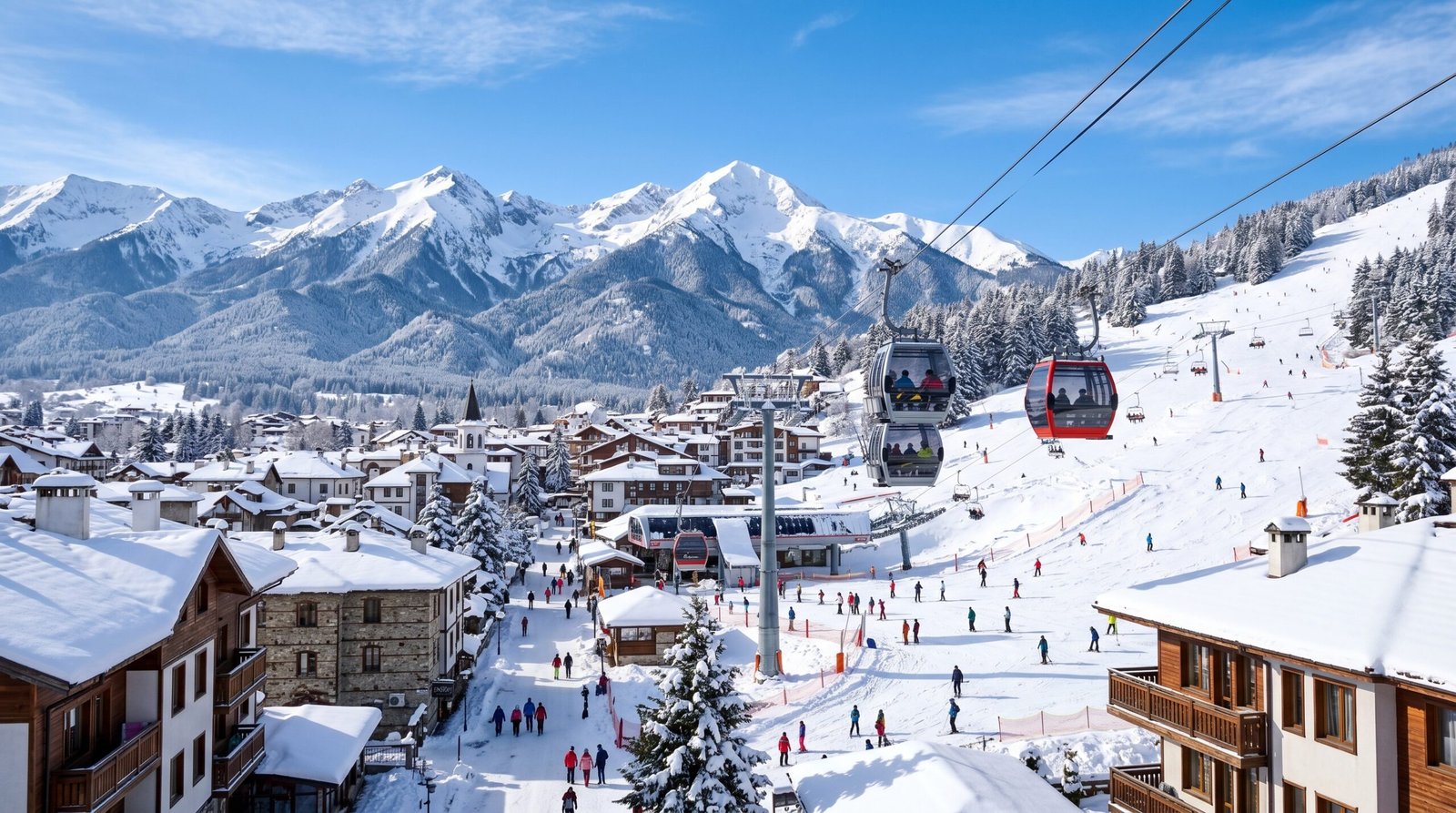

Bansko has a split personality, and once you understand it, the whole town makes sense. In winter it’s a serious ski resort – the biggest in Bulgaria, with terrain that keeps confident skiers happy for a week. In summer it’s a hiking base for one of Europe’s most dramatic mountain ranges, and somewhere along the way it became one of the continent’s biggest digital-nomad hubs.
I work in Bulgarian tourism and I’ve watched Bansko change. Ten years ago it was a winter-only ski town that emptied out in April. Now there are remote workers in the coworking spaces year-round, a Nomad Fest that pulls in people from dozens of countries, and apartments marketed on their fibre speeds. It’s a strange, good kind of evolution.
This guide covers all three Banskos – the ski one, the hiking one, and the laptop one. If you’re choosing between Bulgaria’s resorts first, read my Bansko vs Borovets vs Pamporovo comparison. If you’ve already settled on Bansko, this is everything you need.
Where to base yourself: Bansko works completely differently depending on where you stay – near the gondola for skiing, the old quarter for atmosphere, or the wider town for long stays. More on that below.
Compare Bansko hotels – book by autumn for peak winter weeks.
Skiing in Bansko
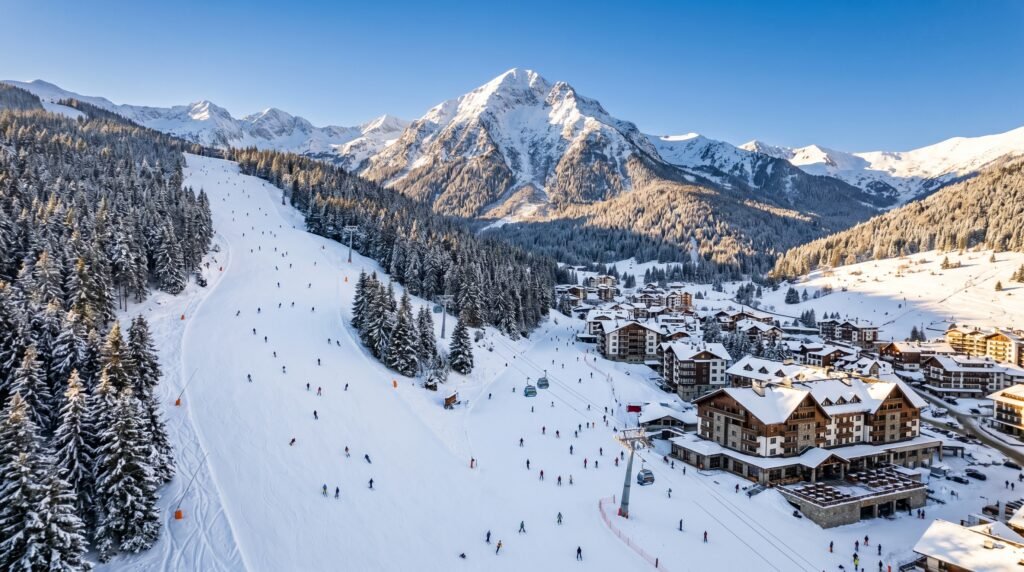
Bansko’s ski area sits in the Pirin Mountains, climbing to 2,600 metres, with around 75 km of pistes. The smart way to understand it isn’t as a list of runs but as connected zones: the gondola delivers you up to Banderishka Polyana, from where you fan out across the learning slopes around Plato and Shiligarnik, the cruising intermediate terrain around Todorka, and the progression runs at Chalin Valog.
The named pistes worth knowing:
- Tomba – the signature black run, the resort’s only genuinely elite slope. A former race piste, steep and demanding.
- Plato 1 – a high-altitude beginner/green slope, one of the best places to learn.
- Shiligarnik 1 – beginner terrain, gentle and wide.
- Todorka – the main intermediate cruiser, blue-red, where most holiday skiers spend their days.
- Chalin Valog 1 & 2 – intermediate, good for progression and linking the mountain.
- Stara pista – older central intermediate slope in the main zone.
So the picture is: one proper black (Tomba), several long beginner routes up high around Plato and Shiligarnik, and a broad intermediate network around Todorka and Chalin Valog. It’s the most varied skiing in Bulgaria, and the snow is the most reliable thanks to that 2,600 m top altitude. Season runs early December to mid-April.
The gondola – and the queue
You need to know about the gondola before you go, because it’s the one thing that frustrates people. It’s an 8-seat cabin lift, with cabins leaving roughly every 30 seconds and a journey of about 30 minutes to the top.
The problem is the morning queue. On a normal busy day, expect 40 to 60 minutes. During holiday peaks – February half-term especially – travellers report waits of two hours or more. It’s the price of Bansko’s popularity, and nobody warns first-timers.
How locals and regulars beat it:
– Go up early, before the late-risers
– Or go up later morning, after the first rush clears
– Stay in ski-in/ski-out accommodation near Banderishka if skiing is your whole focus
– If you’re already heading to the upper zone, some people arrange private transport up
You’ll hear talk of a “mid-station shuttle.” Treat that as a local workaround, not a guaranteed official service – it varies. The reliable advice is simply: don’t aim for the gondola at 9am sharp in a peak week.
Ski schools and lessons
This is one reason Bansko is so good for beginners and families – the ski-school market is dense and competitive, and almost all of it is set up for English-speaking guests. The main names you’ll see are Ski Bansko, Sankiy Ski, and Tsakiris Ski & Snowboard, plus hotel-linked packages that bundle lessons, rental and lift pass.
For kids, ski kindergarten and beginner programmes are widely available, using the gentle slopes around Plato and Shiligarnik. Exact ages and group sizes vary by school, so book ahead and check the specifics with your provider.
Compare Bansko ski hotels with lesson packages – bundled deals usually beat booking lessons separately.
Après-ski and nightlife
Bansko has the best nightlife of Bulgaria’s three ski resorts, but it’s a town nightlife, not a purpose-built party strip. The old quarter is packed with mehanas – traditional taverns with open fires, grilled meat, rakia and live folk music. After a day on the mountain you walk cobbled streets between taverns, not a concrete plaza of identikit bars.
The scene is broad and casual: live-music mehanas, beer bars, late dinners that turn into late nights. It’s friendly rather than flashy – no high-end alpine clubs, just good food, cheap drinks and a buzz that runs all week in season. That mix is a big part of why people come back.
Bansko in summer
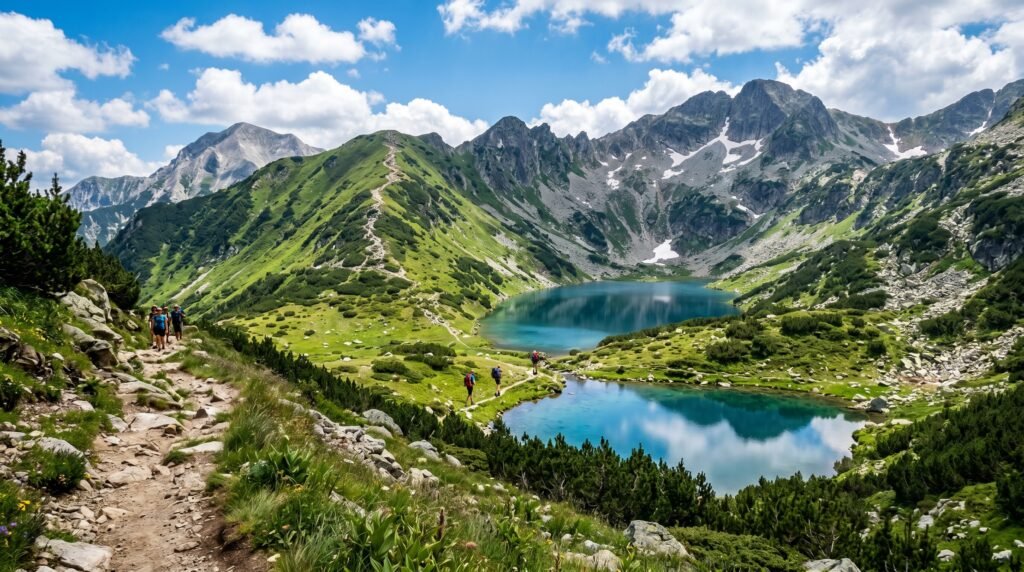
Here’s what surprises people: Bansko might be even better in summer. The crowds thin, the prices drop to the lowest of the year, and the Pirin mountains open up for hiking. This is serious alpine terrain – glacier lakes, high ridges, the kind of scenery that makes people rethink what Bulgaria is.
Hiking in Pirin National Park
Most of the best hikes start from Vihren Hut, reached by summer shuttle bus from town. Pirin National Park has around 20 marked trails, and from the hut you’re straight into the high alpine.
The routes worth planning around:
- The Banderitsa lakes circuit – from Vihren Hut to Muratovo Lake, then on to Banderishko, Frog Lake and Banderitsa Lake. The most photogenic day hike near Bansko, a string of glacier lakes below the ridges.
- Vihren Peak — Bulgaria’s second-highest summit, approached from the Shiligarnika/Banderitsa side. A proper mountain day for fit walkers.
- The wider Pirin trail network – ridge and valley routes radiating from the Banderitsa Valley.
The key thing for visitors: with transport arranged sensibly, these work as straightforward day hikes. You don’t need to be a mountaineer to reach the glacier lakes. The terrain is more dramatic than most people expect from a “budget ski town.”
Compare summer hotels in Bansko – summer rates are the cheapest of the year. Sort an eSIM so you’ve got maps and data on the trails.
Bansko for digital nomads
Bansko has quietly become one of Europe’s most established mountain nomad hubs. The anchor is Bansko Nomad Fest – the 2026 edition runs 20–30 June, based at Coworking Bansko, drawing remote workers, founders and freelancers from around the world. It started smaller and keeps expanding, which tells you the scene is real and growing.
Coworking and coliving:
– Coworking Bansko – the best-known shared workspace and the festival’s home base
– Nomadico Bansko – coliving plus coworking
– Plenty of apartments and hotels now market fast fibre and work-ready setups
Cost of living (monthly, rough):
– Rent: €400–700 for a decent one-bedroom in shoulder season (more in peak winter or premium buildings)
– Food: €250–450 if you mix supermarkets and eating out
– Coworking: €100–200 depending on membership
Internet: generally strong for a mountain town – modern apartments and coworking spaces commonly run 50–200 Mbps, with some spaces advertising 100 Mbps+. The catch is that Bansko’s housing stock mixes older buildings with patchy Wi-Fi and newer nomad-oriented places with proper fibre. Always verify the connection before committing to a long stay.
The community itself is unusually dense for a small Bulgarian town – a visible, year-round mix of long-stay Europeans, remote founders and seasonal regulars. For the price and the mountain setting, it’s hard to match.
Where to stay in Bansko
Bansko’s layout is best understood by what you want from the trip rather than strict neighbourhood names:
- Near the gondola – the modern hotel strip by the lower station. Best for skiers who want early starts and minimal faff.
- Old Town – best for atmosphere, mehanas and nightlife. You’re among the taverns and cobbles.
- Wider town / apartment zone – best value for longer stays and nomad living.
The hotel stock runs from budget apartments through mid-range family hotels to upscale spa properties. In peak winter, expect roughly €50–90 budget, €90–180 mid-range, €180+ for higher-end spa hotels. Summer is much cheaper.
Compare hotels by area in Bansko – staying near the gondola is worth the premium in peak weeks.
Where to eat
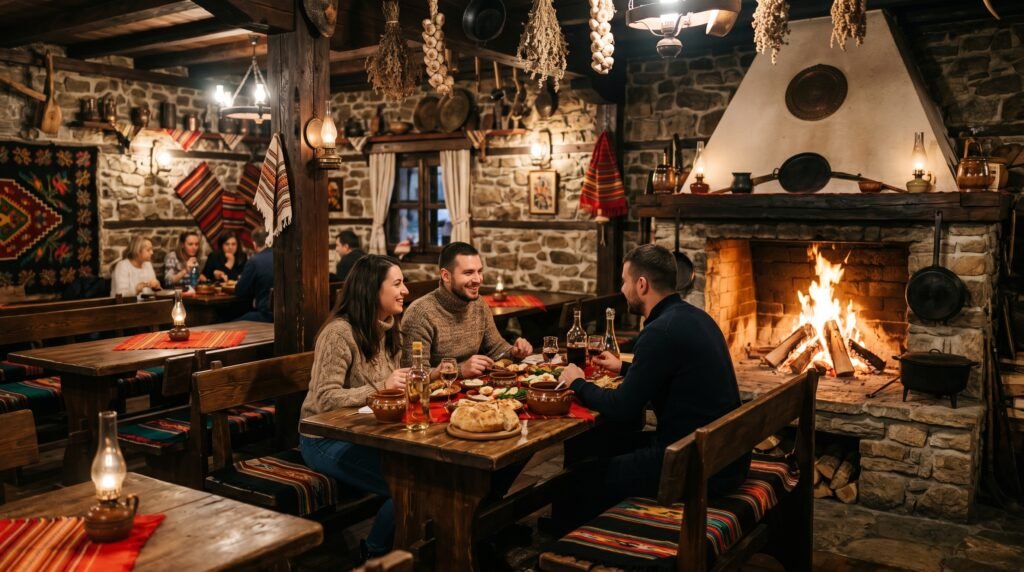
Bansko’s dining identity is its old-town mehanas. The names worth seeking out:
- Baryakova – classic mehana, traditional Bulgarian
- Dedo Pene – one of the best-known, atmospheric and popular
- Banski Han – another old-town favourite
- Plus Bansko Tavern, Chevermeto and Forest Cup among the popular wider choices
Order the grilled meats, the slow-cooked dishes, and local wine or rakia. Mehana food is hearty, cheap, and exactly what you want after a day on the slopes or the trails.
Getting to Bansko
Sofia Airport is the gateway, around 2.5–3 hours by road – the longest transfer of Bulgaria’s three resorts. Your options:
- Pre-booked transfer – easiest, door to door, no faff with ski luggage. The transfer market here is well developed.
- Bus – regular services on the Sofia–Bansko corridor, journey around 2 hours 47 minutes, multiple operators.
- Self-drive – straightforward mountain-road driving via the southwest corridor, but be wary of winter conditions and holiday traffic.
Book a Sofia–Bansko transfer or hire a car if you want to explore the region.
Day trips from Bansko
Bansko makes a good base for the southwest. Driving distances:
- Melnik – 1.5–2 hours. Bulgaria’s smallest town, wine region, sand pyramids.
- Rila Monastery – 2-2.5 hours. The UNESCO monastery, Bulgaria’s most famous.
- Plovdiv – 2.5-3 hours. Roman theatre, old town, one of Bulgaria’s best cities.
A hire car makes these easy; some run by bus or organised transfer too.
Bansko FAQ
Is Bansko good for beginners?
Yes – the ski schools are plentiful and English-speaking, and the learning slopes around Plato and Shiligarnik are gentle. Just be aware of the gondola queue getting up the mountain.
How bad are the gondola queues in Bansko?
On a normal busy morning, 40–60 minutes. In peak holiday weeks like February half-term, up to two hours. Go up early or later in the morning to avoid the worst.
Is Bansko worth visiting in summer?
Very. It’s a hiking gateway to Pirin National Park with glacier lakes and high ridges, the cheapest hotel prices of the year, and a thriving digital-nomad scene.
What is Bansko Nomad Fest?
An annual remote-work festival based at Coworking Bansko, drawing nomads from around the world. The 2026 edition runs 20–30 June.
How much does it cost to live in Bansko as a nomad?
Roughly €750–1,350 a month all-in: €400–700 rent, €250–450 food, €100–200 coworking. Cheaper in shoulder season.
How do I get from Sofia to Bansko?
Pre-booked transfer (easiest), bus (around 2h47), or self-drive – all about 2.5–3 hours.
Is the internet good in Bansko?
Generally strong for a mountain town – 50–200 Mbps in modern apartments and coworking spaces. Older buildings can be patchy, so verify before a long stay.
Planning your Bansko trip
- Hotels: compare across Bansko – book early for peak winter
- Transfers: Sofia–Bansko transfer
- Car hire: compare prices for day trips
- eSIM: stay connected on the slopes and trails
Read more:
– Bulgaria Ski Resorts: Bansko vs Borovets vs Pamporovo
– Bulgaria Travel Guide
– Borovets Guide
– Pamporovo Guide