

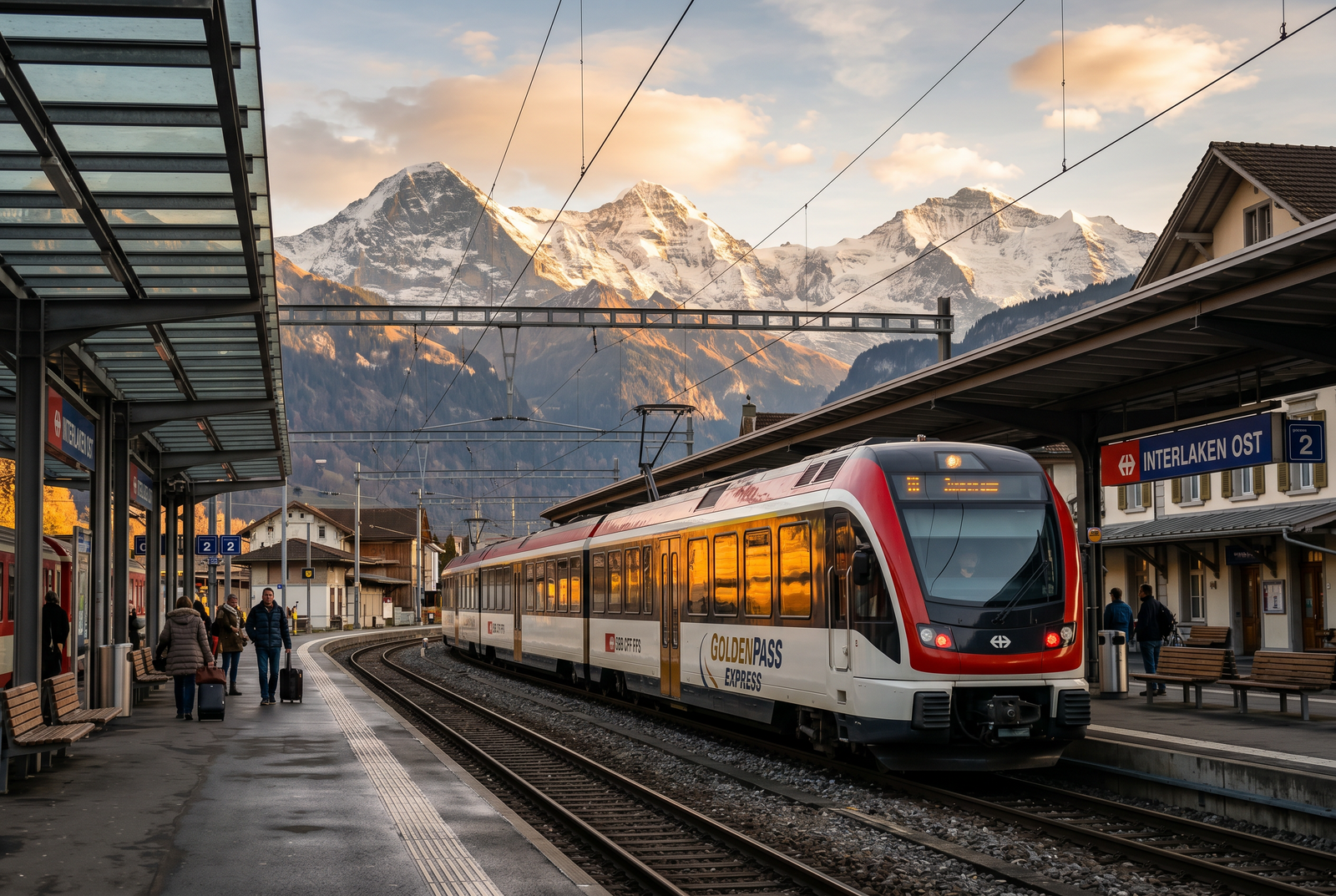

Switzerland makes even practical decisions feel considered.
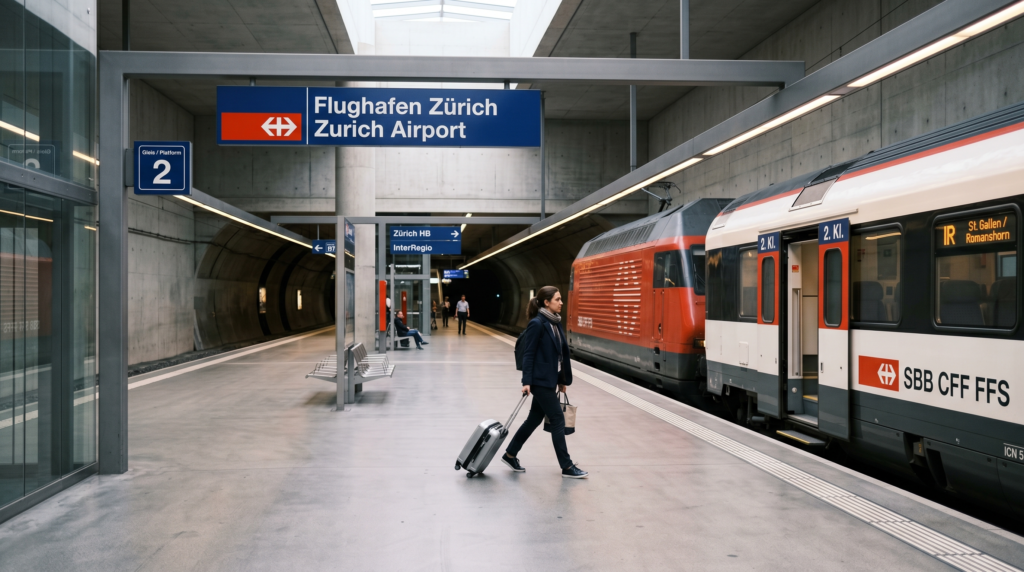
You land at Zurich Airport, follow the signs downstairs to the rail level, and the country immediately poses a very Swiss question: do you want simplicity, flexibility, or the lowest possible fare?
For first-time visitors, choosing between the Swiss Travel Pass, the Swiss Half Fare Card, and regional alternatives can feel far more complicated than it should. The good news is that the right choice usually becomes obvious once you know what kind of trip you’re actually planning.
If your itinerary includes Lucerne, the Luzern–Interlaken Express, and a few days moving through the Alps by train, one option will almost certainly feel smoother than the others.
The mistake most travellers make is treating every pass as a money-saving tool. In reality, the best Swiss rail pass is usually the one that makes the trip feel easier from the moment you land.
For first-time UK visitors, choosing between the Swiss Travel Pass, the Swiss Half Fare Card, and regional alternatives is less about finding the objectively “best” option and more about being honest about the kind of trip you want to have.
If your itinerary includes Lucerne, a scenic train to Interlaken, and a morning in Lauterbrunnen, one of these passes will make the whole thing feel effortless. The wrong one will leave you buying individual tickets at station machines with jet lag and a suitcase.
This guide is written for that moment — before you have booked anything, while the options still look like a wall of Swiss precision you have not quite parsed yet.
“The right pass doesn’t just save money. It removes a layer of decisions so you can actually notice the scenery.”
The Main Passes, Explained Without Jargon
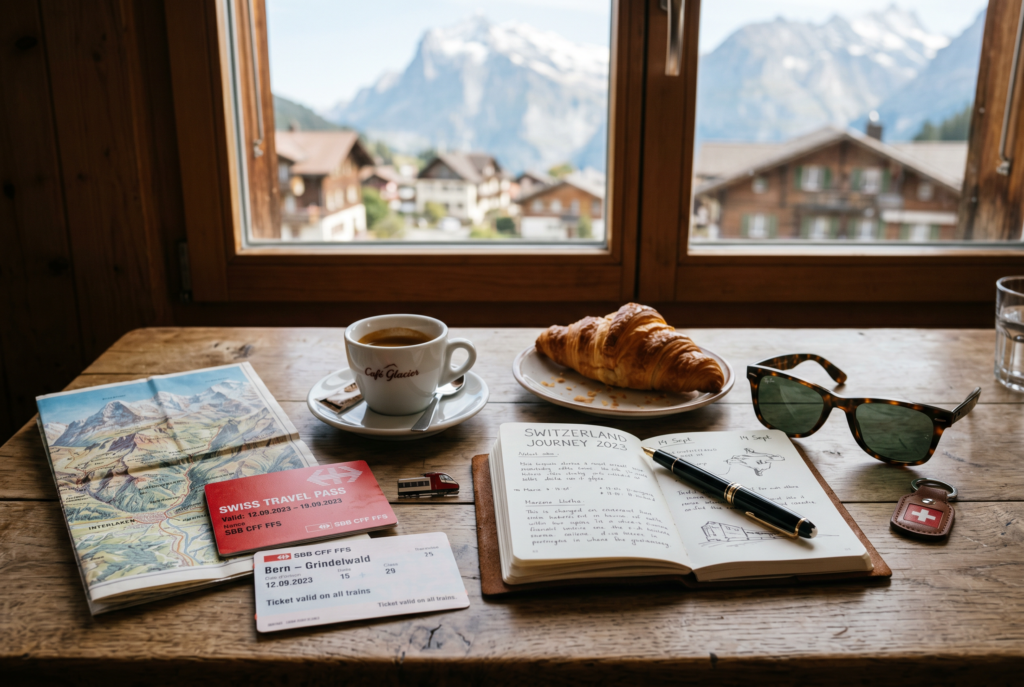
There are three products worth understanding. Everything else is a variation on one of them.
Swiss Travel Pass
The Swiss Travel Pass is the most complete product.
It gives international visitors unlimited travel by train, bus, and boat across Switzerland for 3, 4, 6, 8, or 15 consecutive days. There is also a Flex version, which lets you use the same number of travel days non-consecutively within a one-month window.
Beyond transport, the pass includes public transit in more than 90 Swiss cities and towns, discounts on mountain railways and gondolas, and free entry to hundreds of museums.
Panorama trains — including the Glacier Express and Bernina Express — are covered for the rail fare itself, though seat reservations and supplements are still extra.
Swiss Half Fare Card
The Swiss Half Fare Card costs CHF 150, is valid for one month, and cuts the cost of most rail, bus, boat, panorama train, mountain railway, and gondola tickets by 50%.
You still buy each journey separately, but at half the normal fare.
This option works best for travellers who are spending longer in one area, taking fewer long-distance journeys, or simply prefer more flexibility.
Regional Passes
Regional passes sit somewhere in between.
They work best when your trip stays mostly inside one area, such as Central Switzerland around Lucerne or the Bernese Oberland around Interlaken and Lauterbrunnen.
For multi-region first-time itineraries, they are usually less practical than the national passes.
Switzerland Train Pass Comparison
The easiest way to choose is to match the pass to your travel style.
| Pass | Best For | Coverage | Main Advantage | Main Drawback |
|---|---|---|---|---|
| Swiss Travel Pass | Multi-region trips and scenic rail travellers | Unlimited trains, buses, boats, city transit and museum entry | Simple and stress-free | Higher upfront cost |
| Swiss Half Fare Card | Flexible travellers and slower itineraries | 50% off most transport and mountain railways | Lower initial spend | You still buy tickets individually |
| Regional Pass | Single-region travel | One defined area only | Excellent local value | Limited flexibility |
| Point-to-point tickets | Very light travel itineraries | Only journeys purchased | Cheapest for minimal travel | Expensive for longer routes |
A useful shortcut:
If your trip reads like a continuous train journey — airport arrival, city stop, scenic express, mountain valley — the Swiss Travel Pass is probably the better option.
If it feels more like a slower base-and-explore holiday, the Half Fare Card often makes more sense.
“Switzerland rewards rail travellers who keep the itinerary focused. The right pass simply lets the country feel as effortless as it looks.”
Is the Swiss Travel Pass Worth It?
For many first-time visitors doing a Zurich Airport → Lucerne → Interlaken → Lauterbrunnen route, yes.
The value becomes obvious surprisingly quickly.
A direct airport train to Lucerne, then the Luzern–Interlaken Express, then regional trains into Lauterbrunnen, city transport, perhaps a lake boat ride or museum visit — all of that is covered without buying additional tickets.
The pass starts paying for itself before you have even had your first proper Swiss meal.
What it is less useful for:
- Staying mostly in one city
- Taking only one or two train journeys
- Minimal sightseeing transport
- Very short itineraries with little movement
The best approach is to calculate your likely train routes individually using the SBB planner and compare them against the pass price.
If the difference is relatively small, most first-time travellers end up appreciating the convenience of the Swiss Travel Pass far more than expected.
Worth noting: if it’s the mountains and skiing you’re after rather than Switzerland specifically, Bulgaria’s resorts offer a similar Alpine feel at a much lower price — see my Bulgaria ski resorts guide.
Compare Swiss Travel Pass Options
Choosing the right rail pass in Switzerland is less about finding the “best deal” and more about understanding how you actually want to travel once you arrive.
Some travellers move constantly — airport to Lucerne, Lucerne to Interlaken, scenic trains through the Alps, mountain villages, lake ferries, and local connections all within a few days. Others prefer a slower rhythm: one base, a handful of train rides, and long afternoons spent in the same region rather than crossing the country.
Switzerland rewards both styles surprisingly well. The difference is that each one is built around a completely different ticket strategy.
That is why so many first-time visitors end up confused between the Swiss Travel Pass, the Swiss Half Fare Card, and regional alternatives. On paper they can look similar. In practice, they create very different travel experiences.
The simplest way to decide is to match the pass to the rhythm of your itinerary, not just the price.
- 3-day passes
- 4-day passes
- Flex versions
- Scenic train compatibility
The Case for the Swiss Half Fare Card
Choosing the right rail pass in Switzerland rarely feels like a simple transport decision. It usually starts somewhere between excitement and mild confusion — standing at your kitchen table with too many tabs open, trying to understand whether you actually need unlimited train travel or whether half-price tickets would quietly make more sense.
The strange thing is that Switzerland makes both options sound equally convincing.
One moment you imagine yourself stepping effortlessly from Zurich Airport onto a train toward Lucerne with everything already covered. The next, you start wondering if you will really move around enough to justify paying for unlimited travel in a country where even a coffee can feel unexpectedly expensive.
And honestly, both thoughts are reasonable.
Some trips through Switzerland are built around movement. You arrive in one city, wake up in another, spend afternoons crossing lakes by boat, then find yourself on a panoramic train with mountains filling the windows for hours at a time. Other trips settle into a slower rhythm — longer mornings, fewer hotel changes, and only the occasional scenic rail journey between quiet days in the same region.
That difference matters more than most people realise.
The Swiss Travel Pass, the Half Fare Card, and regional rail passes are not really competing products. They are different ways of experiencing the country itself. One removes almost every logistical decision from the trip. Another gives you more flexibility and lower upfront costs. A third works best when you barely leave one corner of the Alps.
In reality, the right Swiss rail pass is usually the one that lets the journey feel lighter once you actually arrive — especially when you are tired after a flight, standing beneath the departure boards at Zurich Airport, trying to figure out which platform quietly leads toward the mountains.
The Half Fare Card is often the smarter choice for travellers moving more slowly.
If you are staying multiple nights in Lucerne, then moving to Interlaken for several more nights while only taking a few longer train journeys, it can be significantly cheaper than the Swiss Travel Pass.
The important distinction is psychological as much as financial.
The Half Fare Card works best when Switzerland feels like a destination to inhabit rather than a route to complete.
You retain flexibility while avoiding the higher upfront cost of unlimited travel.
A useful rule:
- If your trip feels like a sequence of separate experiences → Half Fare Card
- If your trip feels like one continuous rail journey → Swiss Travel Pass
Scenic Trains and What the Passes Actually Cover
Scenic trains are where many travellers start leaning toward the Swiss Travel Pass.
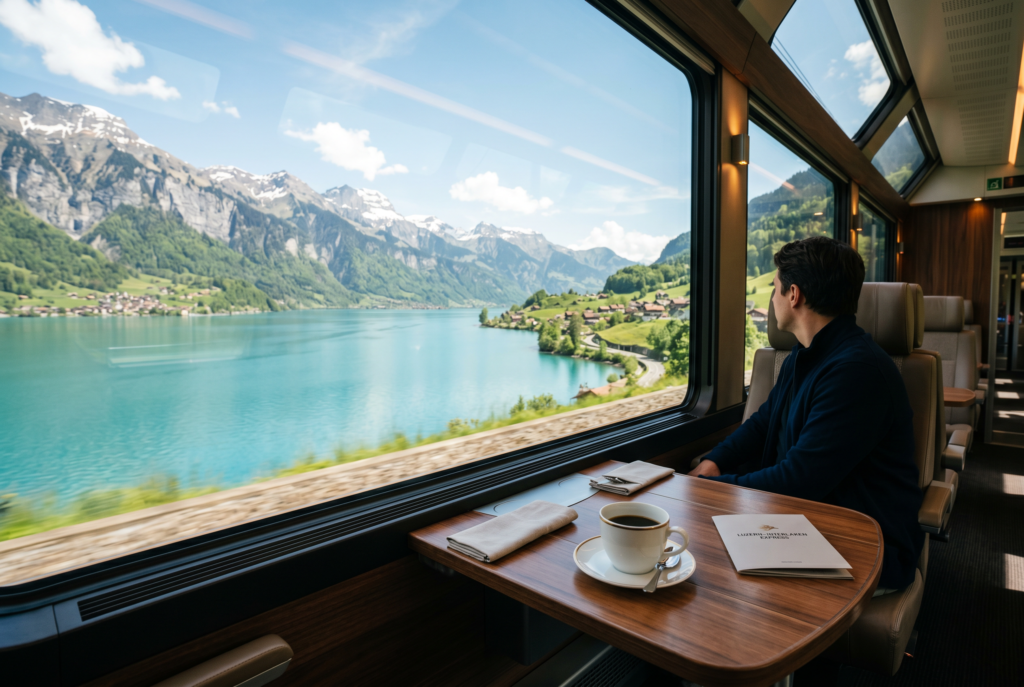
Luzern–Interlaken Express
This is one of the easiest scenic train journeys to include in a short Switzerland itinerary.
The route runs hourly, takes around 1 hour 50 minutes, and passes lakes, waterfalls, alpine meadows and the Brünig Pass.
The Swiss Travel Pass covers the route completely.
The Half Fare Card gives you 50% off.
Seat reservations are optional but highly recommended during busy seasons.
For first-time visitors, this route often becomes the highlight of the entire trip.
Glacier Express
The Glacier Express is slower, more iconic, and more deliberate.
It runs between Zermatt and St. Moritz and is considered one of the world’s classic scenic rail journeys.
Both passes help:
- Swiss Travel Pass → rail fare included
- Half Fare Card → 50% discount
However, both still require mandatory seat reservations and possible supplements.
This is one of the most common misunderstandings among first-time visitors.
A rail pass does not automatically mean every scenic train is completely free.
Book Scenic Train Experiences in Switzerland
- Luzern–Interlaken Express
- Glacier Express
- Bernina Express
- Swiss panoramic rail routes
Arriving at Zurich Airport: Why This Matters
One of the underrated advantages of the Swiss Travel Pass is how smoothly it works from the very first hour.
Zurich Airport is directly connected to Switzerland’s national rail network.
After landing, you simply walk downstairs to the train platforms and continue directly toward Lucerne, Zurich, Interlaken, or almost anywhere else in the country.
For a first-time visitor arriving from the UK with luggage and jet lag, removing the need to buy individual airport train tickets immediately makes the trip feel calmer.
The direct Zurich Airport to Lucerne journey usually takes just under an hour.
The Half Fare Card also works perfectly here — you simply purchase the ticket at half price.
Both systems are easy.
The difference is whether you want simplicity or precision.
Staying Connected in Switzerland
One thing many travellers underestimate is how often they rely on mobile data during a Switzerland rail trip.
Train platforms change quickly, weather conditions matter in the mountains, and Google Maps becomes part of the journey.
Using an eSIM before landing makes the entire arrival process smoother.
Get a Switzerland eSIM
- Instant mobile data
- No roaming surprises
- Useful for maps and train changes
Who Should Buy Which Pass?
There is no universal right answer.
There is usually a right answer for your itinerary.
Buy the Swiss Travel Pass if you:
- Are arriving via Zurich Airport and travelling onward immediately
- Plan to visit Lucerne, Interlaken and Lauterbrunnen
- Want to use scenic trains
- Expect to use city transport frequently
- Prefer paying once rather than buying multiple tickets
Buy the Swiss Half Fare Card if you:
The Swiss Half Fare Card works best for travellers who are moving more slowly through Switzerland rather than constantly changing locations.
If your itinerary is built around one or two main bases — for example Lucerne and Interlaken — with a handful of scenic train rides and mountain excursions in between, the Half Fare Card often becomes the smarter financial choice. You still get access to Switzerland’s incredibly efficient rail network, but without paying upfront for unlimited daily travel you may not fully use.
It also suits travellers who prefer flexibility. Instead of feeling pressured to “make the pass worth it” every day, you simply buy tickets as needed at half price throughout the country.
The Half Fare Card is usually the better option if you:
- Are staying longer in one base
- Plan fewer long-distance rail journeys
- Prefer lower upfront costs
- Do not mind buying individual tickets
Consider a Regional Pass if you:
Regional passes make the most sense when your Switzerland itinerary is concentrated entirely within one area.
For example, travellers staying around Lucerne and Central Switzerland or focusing only on the Bernese Oberland region — Interlaken, Lauterbrunnen, Grindelwald, and nearby mountain routes — can sometimes save money with region-specific transport coverage.
The downside is flexibility. Once your route starts crossing larger parts of the country, regional passes become less efficient and less convenient than national rail options like the Swiss Travel Pass.
Regional passes are usually best if you:
- Are staying entirely within one region
- Plan repeated local journeys
- Are not crossing Switzerland significantly
Use Point-to-Point Tickets if you:
Point-to-point tickets are often overlooked, but they can still be the cheapest option for very light itineraries.
If your Switzerland trip involves only one or two train journeys total — perhaps Zurich Airport to Lucerne and back again — there is a good chance a national rail pass simply will not justify its cost.
This option works best for travellers who are staying mostly in one destination and do not expect to make spontaneous scenic rail journeys or multiple mountain excursions during the trip.
Point-to-point tickets make the most sense if you:
- Are making only one or two journeys total
- Are staying mostly in one destination
“A first-time visitor to Switzerland often overestimates how spontaneous they’ll be. The best trips are usually quite focused — and that is exactly when a Swiss Travel Pass earns its cost.”
Common Mistakes Worth Avoiding
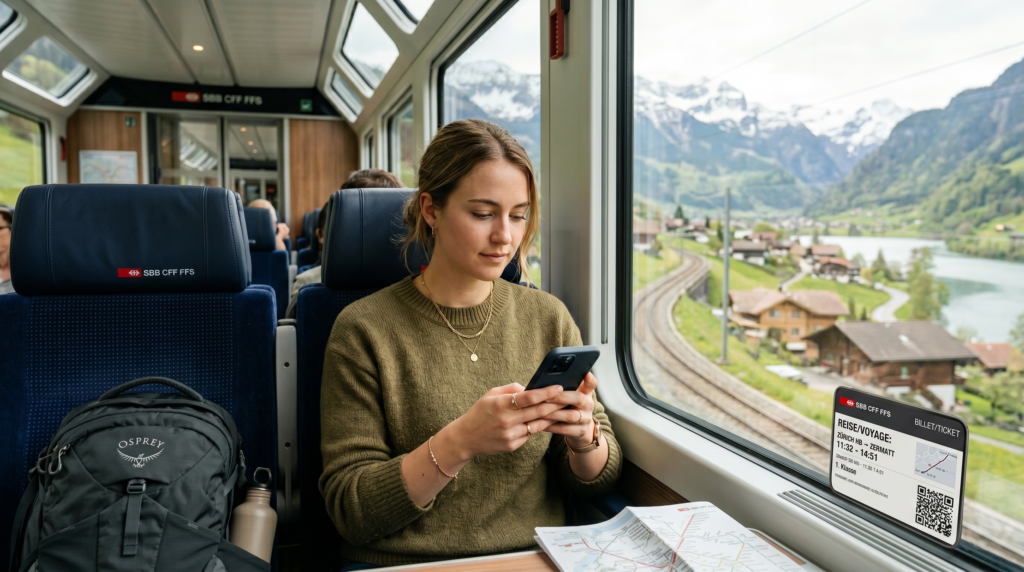
One of the easiest ways to overspend in Switzerland is making transport decisions that do not actually match the rhythm of your trip.
A lot of first-time visitors buy passes based on what sounds premium or flexible without thinking about how they will realistically move around the country once they arrive. Switzerland’s rail system is incredibly efficient, but that also means the small decisions matter more than people expect — scenic train reservations, airport transfers, mountain supplements, and even hotel location can quietly change the value of a pass.
Most transport mistakes in Switzerland are not dramatic. They are small logistical choices that slowly make the trip feel more complicated than it needs to be.
The good news is that almost all of them are avoidable once you understand how the rail system actually works in practice.
Buying the Wrong Pass for the Wrong Style of Trip
One of the most common mistakes first-time visitors make is choosing a pass based on what sounds premium rather than what actually matches their itinerary.
Some travellers buy the Swiss Travel Pass because it feels like the “complete” option, then realise halfway through the trip that they are spending most of their time in one town and barely using the network enough to justify the upfront cost. Others go too far in the opposite direction, choosing the Swiss Half Fare Card to save money initially, only to discover they are constantly buying tickets individually between Lucerne, Interlaken, Lauterbrunnen, and regional connections.
The right pass depends less on budget and more on movement. If your Switzerland itinerary reads like a continuous rail journey — Zurich Airport to Lucerne, then onward scenic routes and mountain connections — the Swiss Travel Pass usually feels smoother and more natural. If your trip is slower and more place-focused, the Half Fare Card often makes more financial sense.
A good Switzerland trip rarely needs maximum flexibility. It needs the right amount of simplicity.
Forgetting Scenic Train Reservations Cost Extra
Another mistake travellers make is assuming scenic trains are fully included without checking reservation requirements.
The Glacier Express is the classic example. The Swiss Travel Pass covers the rail fare itself, but reservations are mandatory and supplements may still apply depending on the season and class of travel. The same principle applies to several premium panoramic routes across Switzerland.
This catches people off guard because “included” and “reserved” are treated separately in the Swiss rail system. Your pass gives you access to the route, but not always a guaranteed seat on the train itself.
The Luzern–Interlaken Express is simpler and usually more affordable, but even there seat reservations are strongly recommended during summer weekends and peak travel months.
The safest approach is to think of the Swiss Travel Pass as your network access, then check scenic trains individually for reservation policies before travelling.
Ignoring the Airport Transfer Leg
A surprising number of travellers forget to include the airport transfer when comparing pass value.
That first train from Zurich Airport to Lucerne or Interlaken matters financially more than many people realise, especially in Switzerland where point-to-point rail tickets can become expensive quickly. Once you add airport transfers, regional connections, local city transport, and scenic routes together, the Swiss Travel Pass often starts looking far more reasonable.
There is also a practical side that becomes obvious after landing. Zurich Airport is efficient, but after a flight most people do not want to stand at ticket machines comparing fares and platforms while managing luggage.
That is one reason many first-time visitors end up appreciating the Swiss Travel Pass more than they expected. It removes small decisions at the exact moment when those decisions feel most exhausting.
Hotel Recommendations for This Switzerland Rail Route
One of the easiest mistakes in Switzerland is booking a beautiful hotel in the wrong location. A lake view may look perfect online, but if it leaves you dragging luggage uphill before an early train, the atmosphere disappears quickly.
For shorter rail itineraries, convenience matters more than extra space. Being able to walk directly from the station to your hotel, drop your bag, and head straight toward the lake or old town changes the rhythm of the entire trip.
If you are following a Lucerne → Interlaken → Lauterbrunnen route, accommodation location matters almost as much as the rail pass itself.
Lucerne
Lucerne works best when you stay close to the station, the lakefront, or the old town. For first-time visitors arriving by train from Zurich Airport, the station-to-lake area is usually the smartest balance between convenience and atmosphere. You can walk from the station to most central hotels within minutes, which matters after a flight or before an early scenic train departure.
The lakefront is the more cinematic option, especially in summer when the evening light over Lake Lucerne completely changes the mood of the city. Old town hotels offer more character, cobblestone streets, riverside views, and quieter evenings away from the station crowds.
Lakefront hotels book quickly during summer, while station-adjacent properties are ideal if you’re continuing toward Interlaken on the Luzern–Interlaken Express the next morning.
The best hotels in Lucerne are usually:
- Near the station
- Along the lakefront
- Close to the old town
Lakefront hotels book quickly during summer, while station-adjacent properties are ideal for early scenic train departures.
Interlaken
Interlaken is one of the easiest bases for exploring the Bernese Oberland region. It sits directly between Lake Thun and Lake Brienz and connects smoothly to Lauterbrunnen, Grindelwald, and most major mountain routes in the area.
If your itinerary includes Lauterbrunnen or Jungfrau-region excursions, hotels near Interlaken Ost station are usually the better choice. They make early morning departures simpler and reduce unnecessary transfers with luggage. The west side of Interlaken tends to feel slightly quieter and more local in the evenings, while the east side is more practical for transport connections.
For a short Switzerland rail itinerary, Interlaken works best as a flexible base rather than a destination packed with attractions itself. The value comes from how efficiently it connects you to the Alps, scenic trains, mountain villages, and lake routes without needing a car.
Interlaken Ost is the better base if you are continuing toward Lauterbrunnen.
FAQ: Swiss Travel Passes Explained
Is the Swiss Travel Pass worth it for first-time visitors?
Usually yes, particularly for multi-stop itineraries involving Lucerne, Interlaken, Lauterbrunnen and scenic train journeys.
Is the Swiss Half Fare Card cheaper?
It can be, especially if you are moving less frequently and staying longer in one area.
Does the Swiss Travel Pass cover the Glacier Express?
It covers the rail fare itself, but reservations and supplements still apply.
Does it cover the Luzern–Interlaken Express?
Yes. The route is fully covered, though seat reservations may still be recommended.
Can I use the Swiss Travel Pass from Zurich Airport?
Yes. Zurich Airport connects directly into the national rail system, and the pass works immediately upon arrival.
Should I buy a regional pass instead?
Only if your trip is concentrated entirely within one Swiss region.
Is the Flex version worth it?
The Flex version works well if your itinerary includes several non-travel days between train journeys.
Final Recommendation
For most first-time UK travellers, the choice comes down to one question:
Do you want ease, or do you want precision?
The Swiss Travel Pass is ease.
You activate it on arrival and move through the country without thinking about tickets, fare calculations, or train machines.
The Half Fare Card is precision.
It rewards travellers who move more slowly and carefully calculate individual journeys.
For a first Switzerland itinerary involving Lucerne, Interlaken and Lauterbrunnen, the Swiss Travel Pass is usually the cleaner and more satisfying option.
Switzerland does not need you to be clever about transport.
It needs you to be looking out of the window when the train rounds the corner and Lake Brienz suddenly appears in that impossible shade of blue.
Ready to Plan Your Switzerland Rail Trip?
- Swiss Travel Pass
- Swiss Half Fare Card
- Scenic train reservations
- Hotels in Lucerne
- Hotels in Interlaken
- Switzerland eSIM
Related Switzerland Articles
- 3 Days in Switzerland by Train
- Interlaken vs Lauterbrunnen
- Best Scenic Trains in Switzerland
- Switzerland Budget Guide for UK Travellers
- Best Day Trips from Lucerne
- Glacier Express vs Luzern–Interlaken Express
Read next: Where to Stay in Switzerland, Luzern–Interlaken Express Guide