

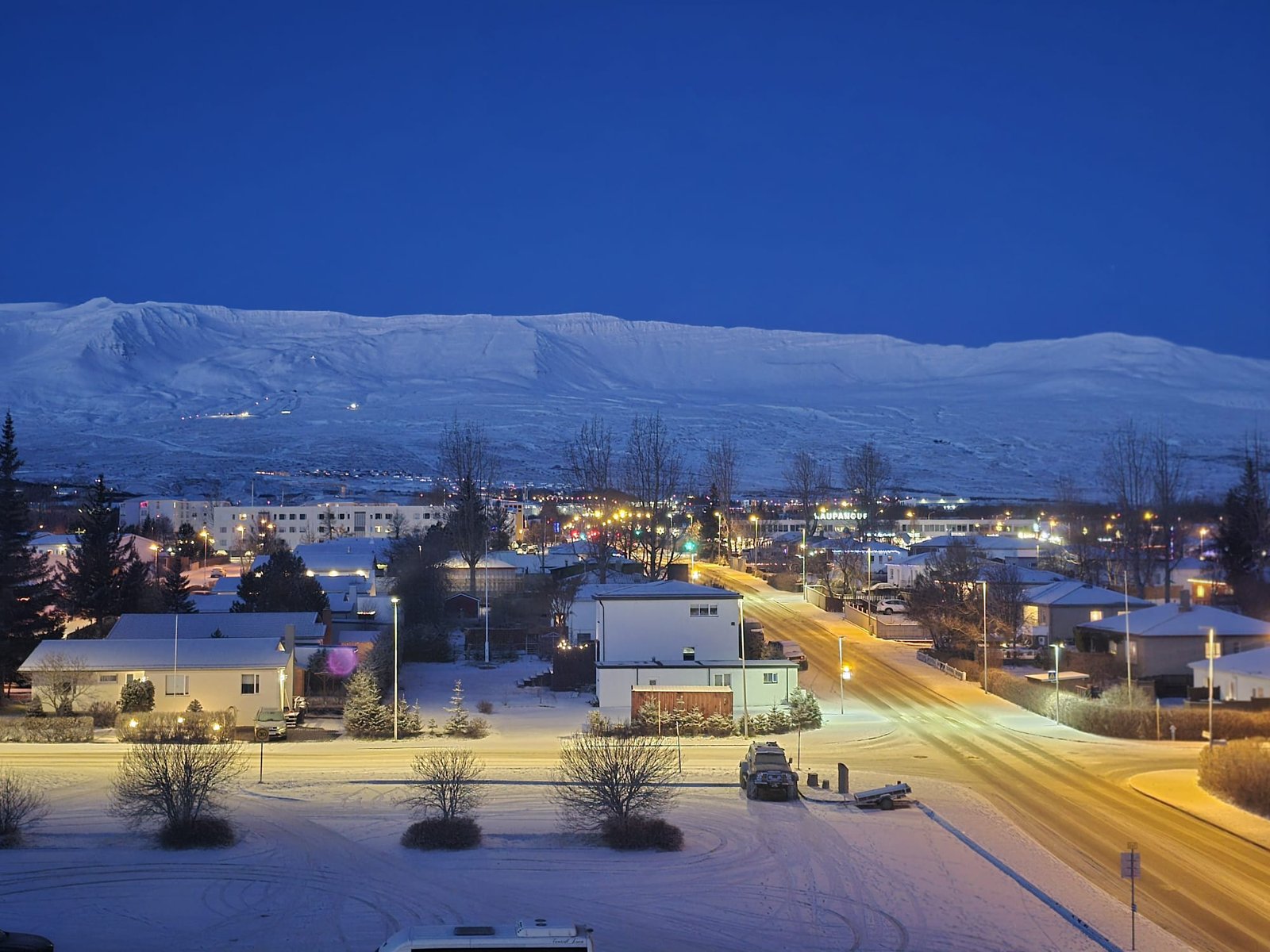

Akureyri – Life Between Fjords and Lagoons
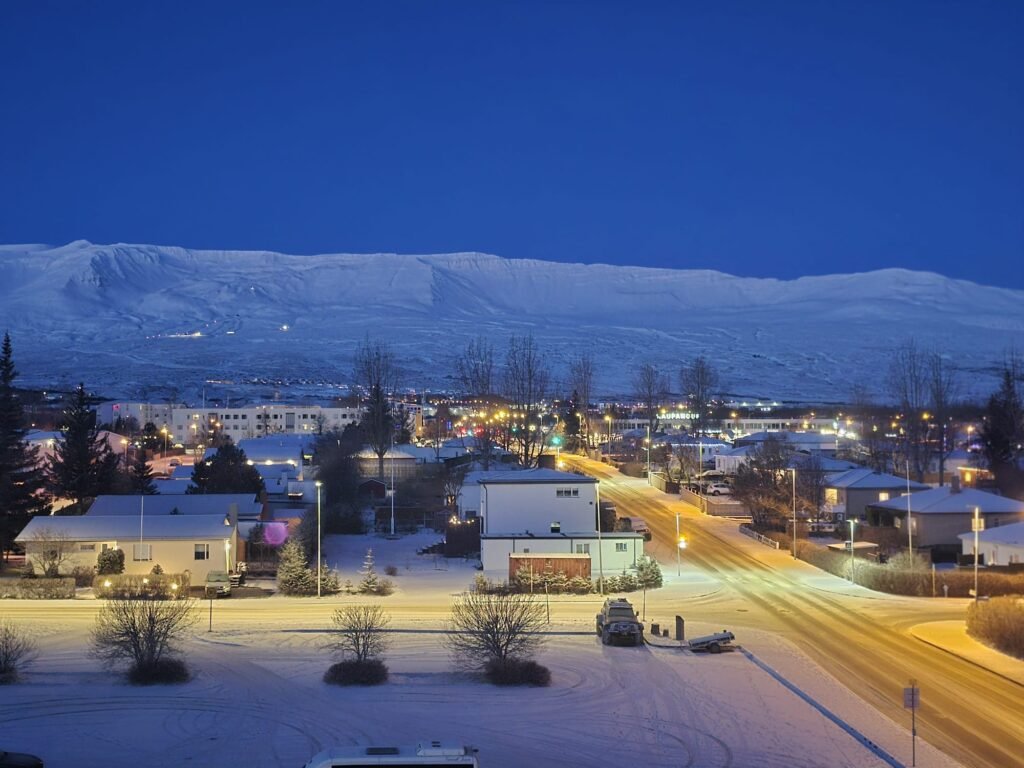
I arrived in North Iceland expecting dramatic landscapes, cold air, and long winter light. What I didn’t expect was to learn that even Christmas here follows different rules. In Akureyri, traditions are shaped not by celebration, but by survival. Stories are older than roads, folklore is woven into daily life, and winter has always demanded respect. Only later did I understand why the North still whispers about trolls, mountains, and things that come alive when the nights grow long.
This is a three‑day travel diary from my time in Akureyri and the surrounding north — written from the road, from warm water under falling snow, from decks facing the Arctic Ocean, and from moments where silence felt louder than words.
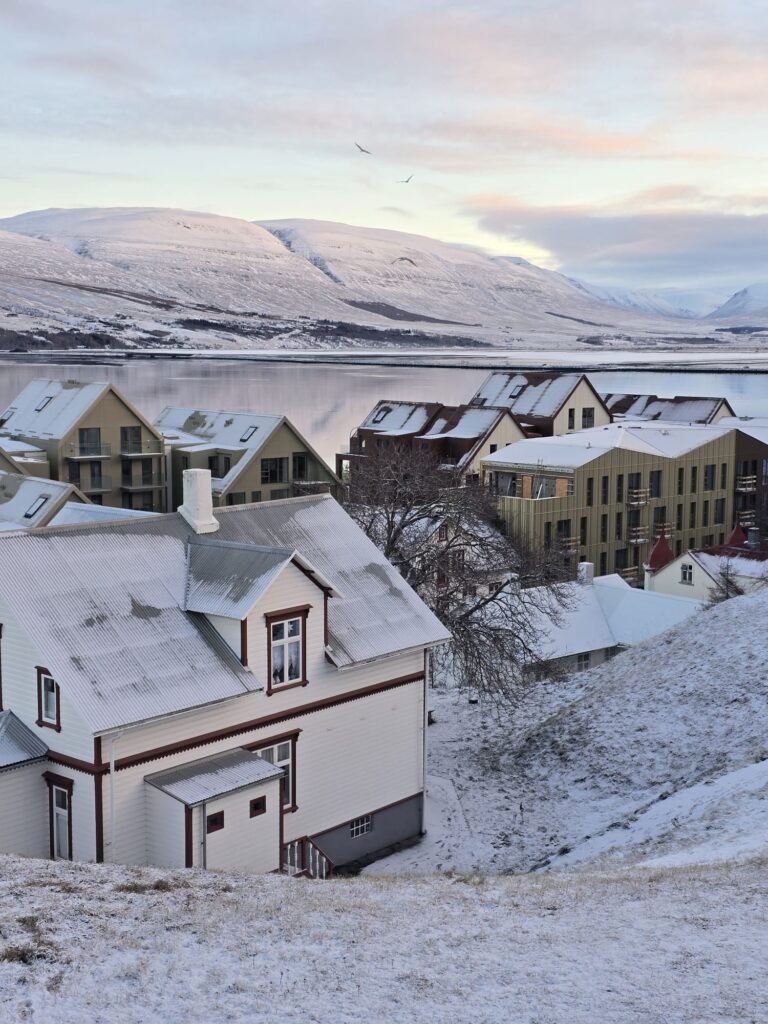
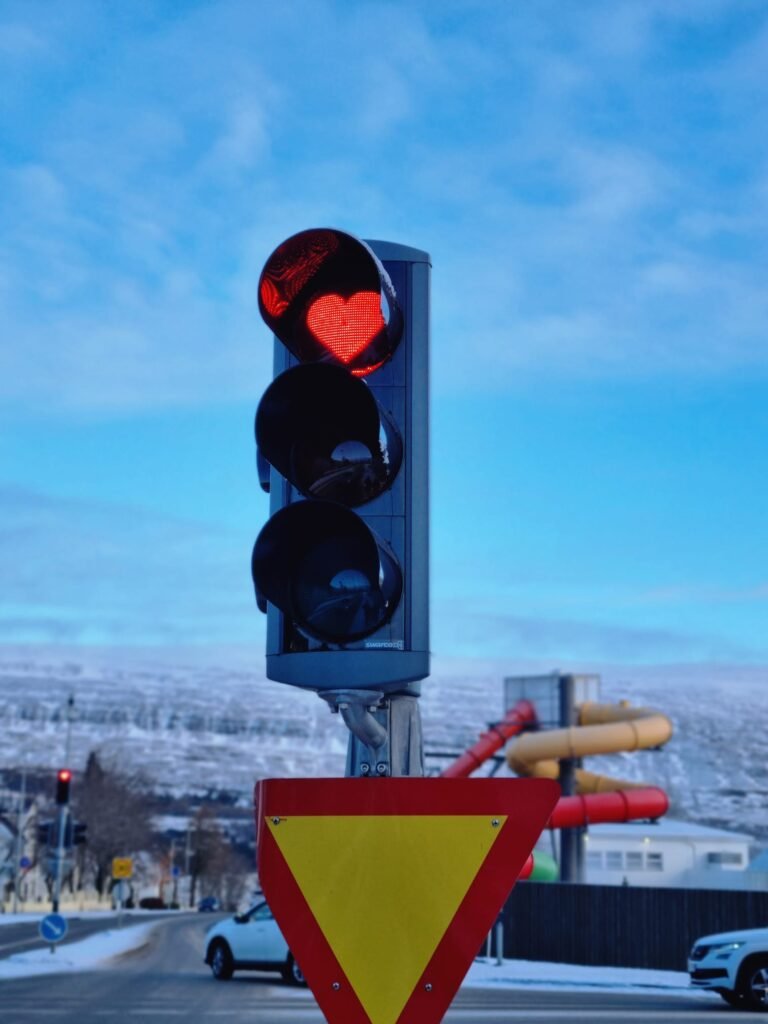
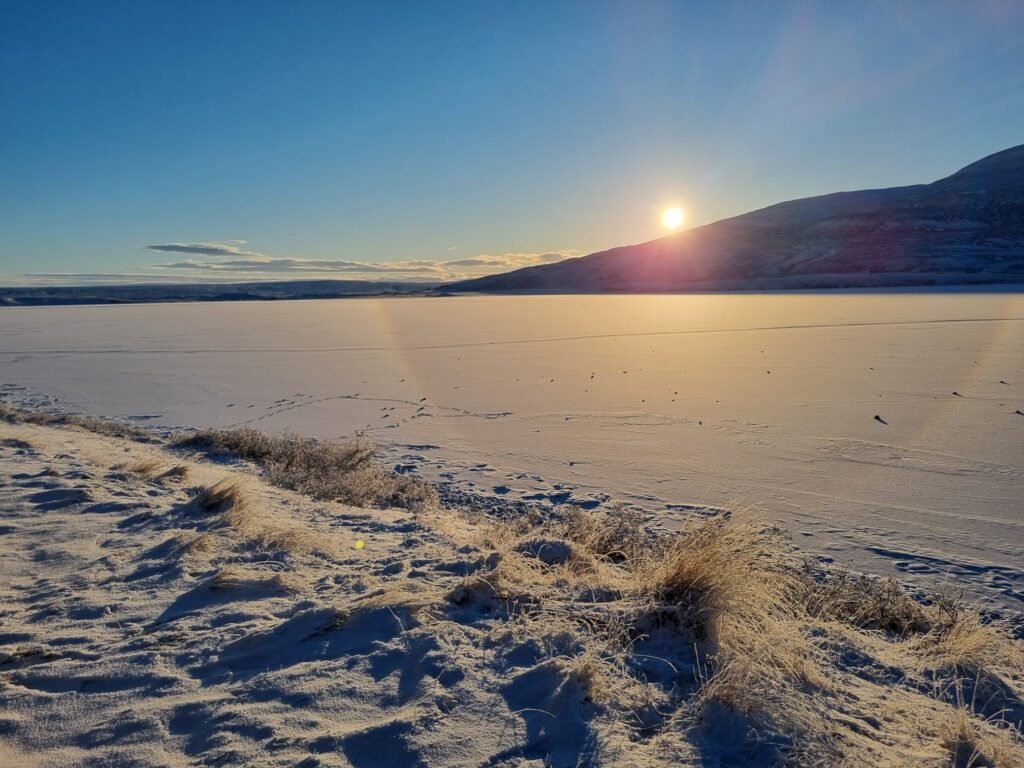
Welcome to the ultimate Akureyri Iceland travel guide, where you will discover the hidden gems of this beautiful region.
Day 1 – Arrival in the North: First Encounters with Akureyri
We arrived around midday on a flight from London Gatwick, trading grey city skies for the crisp clarity of northern Iceland. From the moment the plane descended, the landscape felt stripped back to essentials — mountains, water, sky. No excess. No noise.
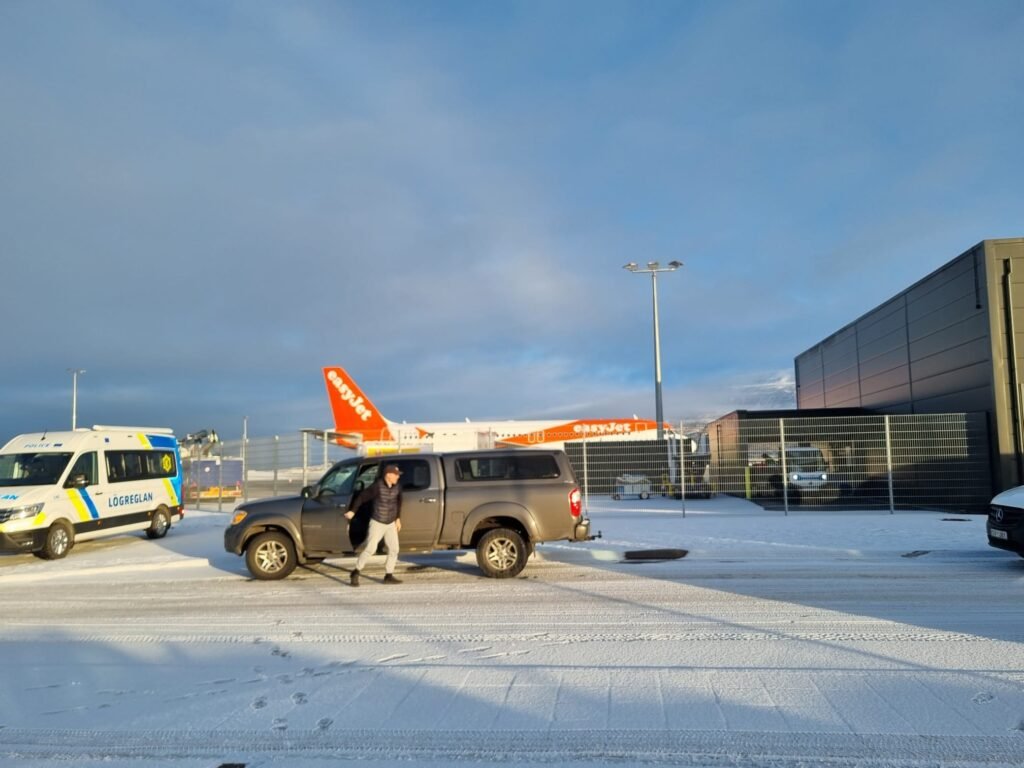
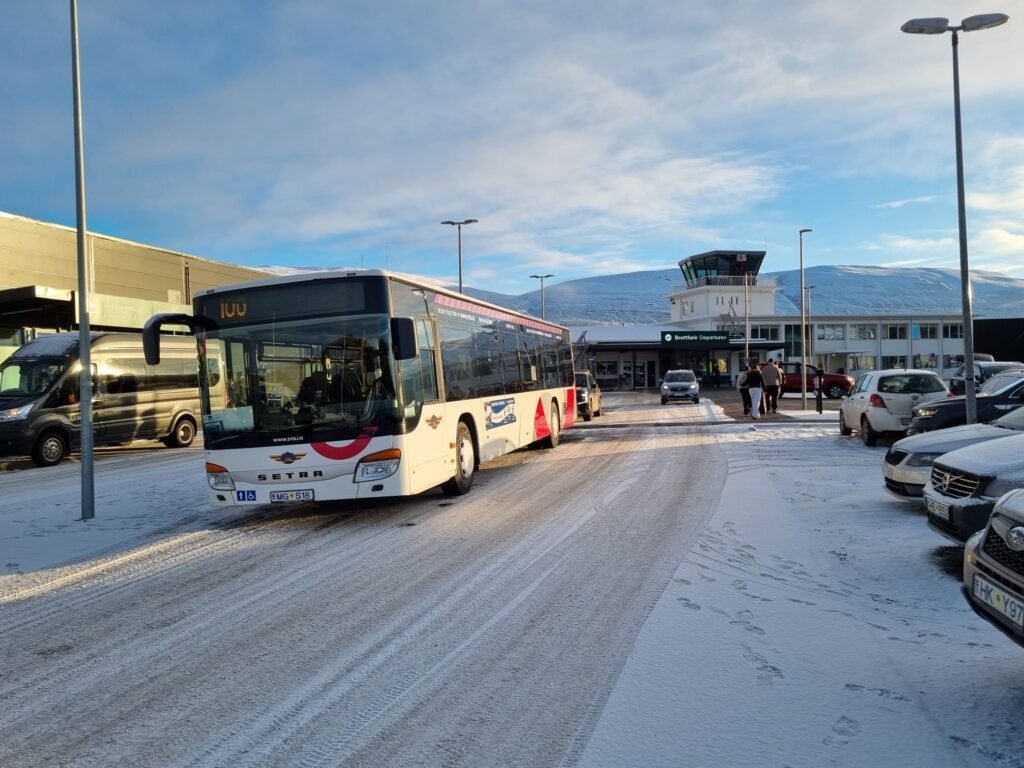
Akureyri Airport may be small, but it is surprisingly active, welcoming around four to five flights a day. Transport between the airport and the town is well coordinated with arrivals and departures, making it easy to reach the center by shuttle or bus for approximately 1,400 ISK per person. If your luggage is light and timing allows, the distance is also walkable — about 45 minutes on foot, rewarded with breathtaking views of the surrounding mountains and the fjord unfolding with every step.

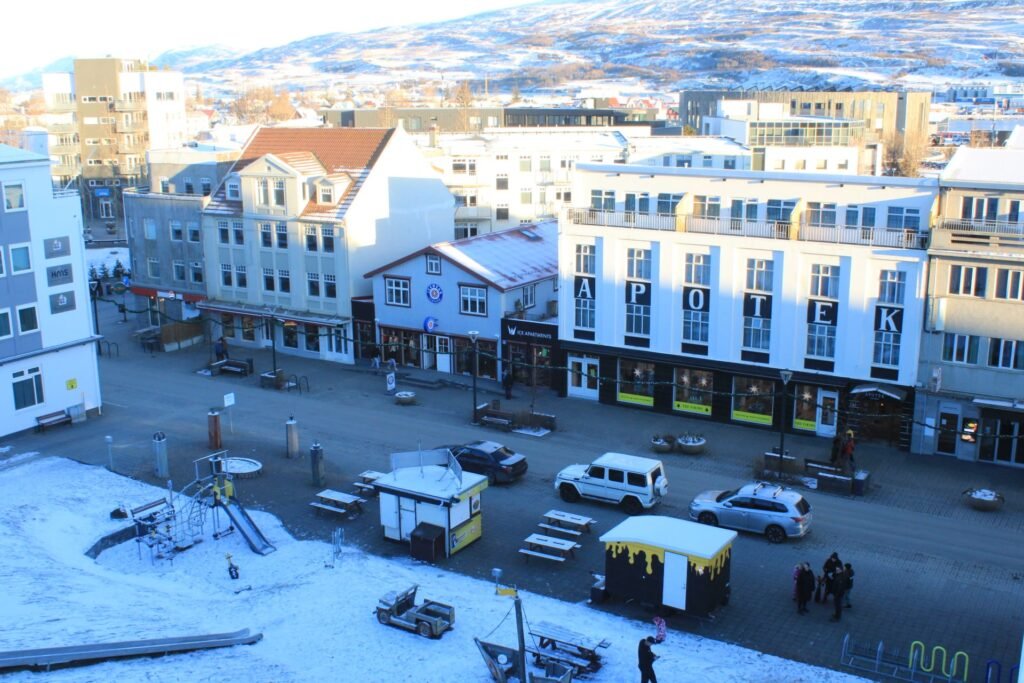
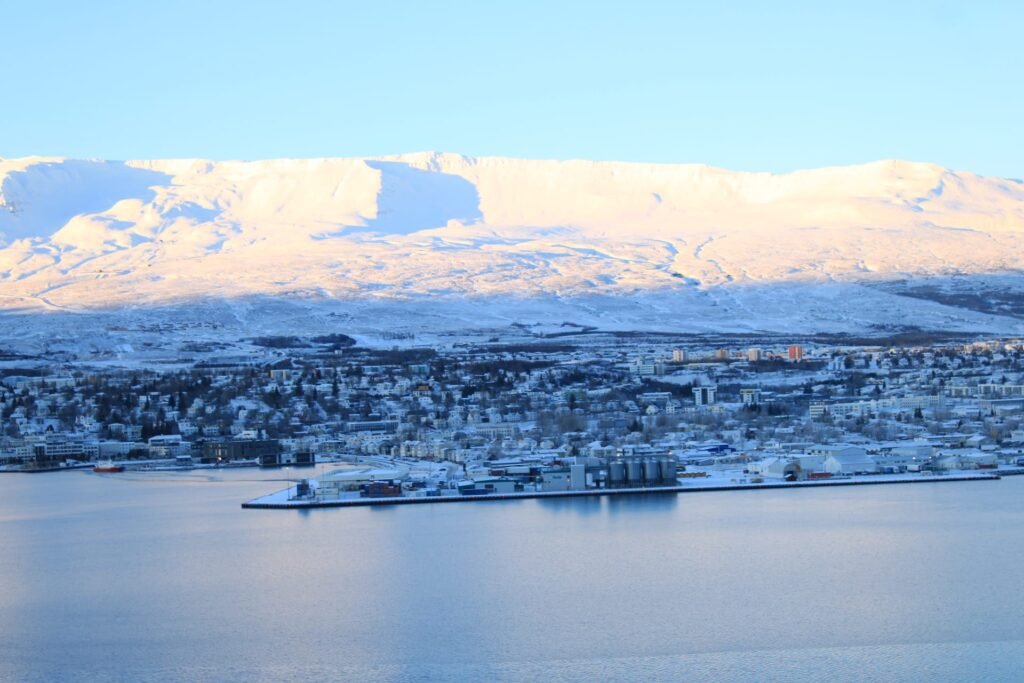
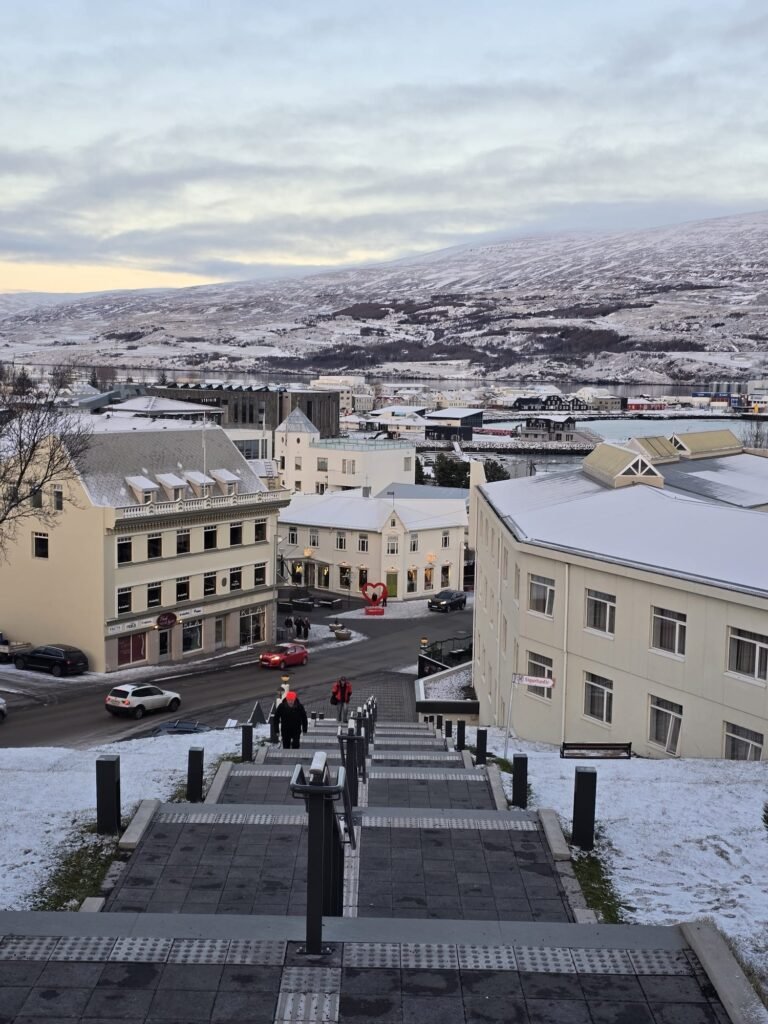
Akureyri is often called the “capital of the North,” but it feels more like a well‑kept secret than a city. Everything is compact, walkable, and deeply connected to the fjord. Eyjafjörður stretches out like a calm corridor of steel‑blue water, framed by mountains that seem to watch rather than dominate.
Our first hours were spent simply walking. Along the waterfront. Through residential streets where colorful houses stand out against snow and rock. Past the botanical garden — a surprisingly lush pocket of life this far north, proving how well Icelanders understand and work with their environment instead of against it.
Exploring Akureyri: The Comprehensive Akureyri Iceland Travel Guide
Accommodation in Akureyri is not about luxury in the traditional sense. It’s about location, warmth, and views. Most hotels are designed to maximize light and views, whether overlooking the fjord, the mountains, or the ski slopes above town. Location matters more than luxury here: being close to the waterfront, the botanical gardens, or within walking distance of cafés and thermal pools often defines the experience more than star ratings. In North Iceland, a good hotel is not just a place to sleep, but a quiet refuge after long days shaped by weather, light, and landscape.
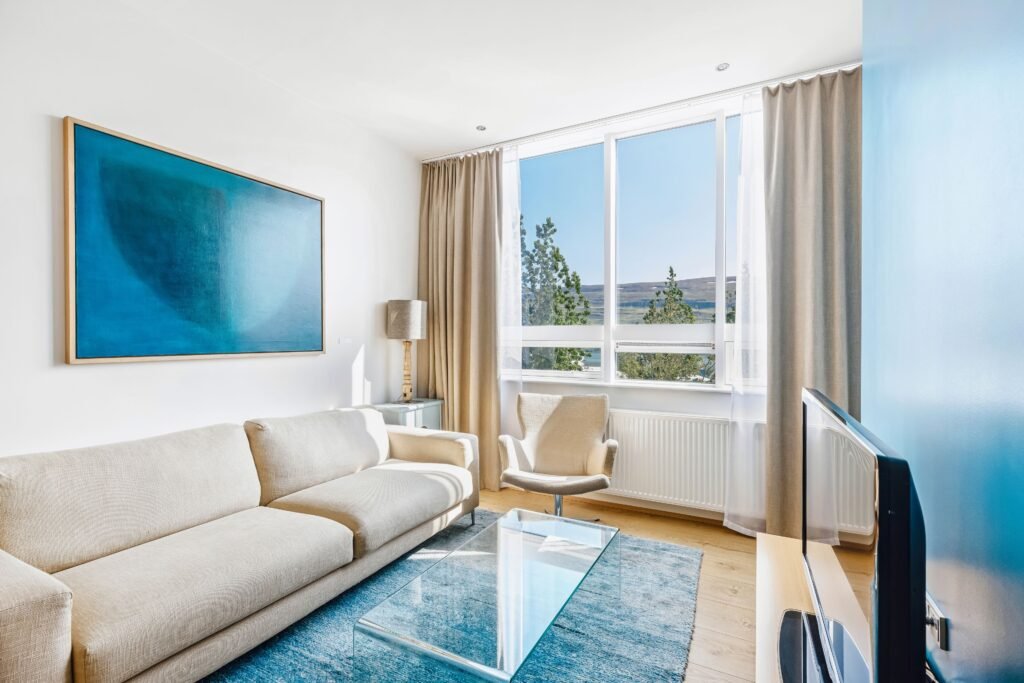
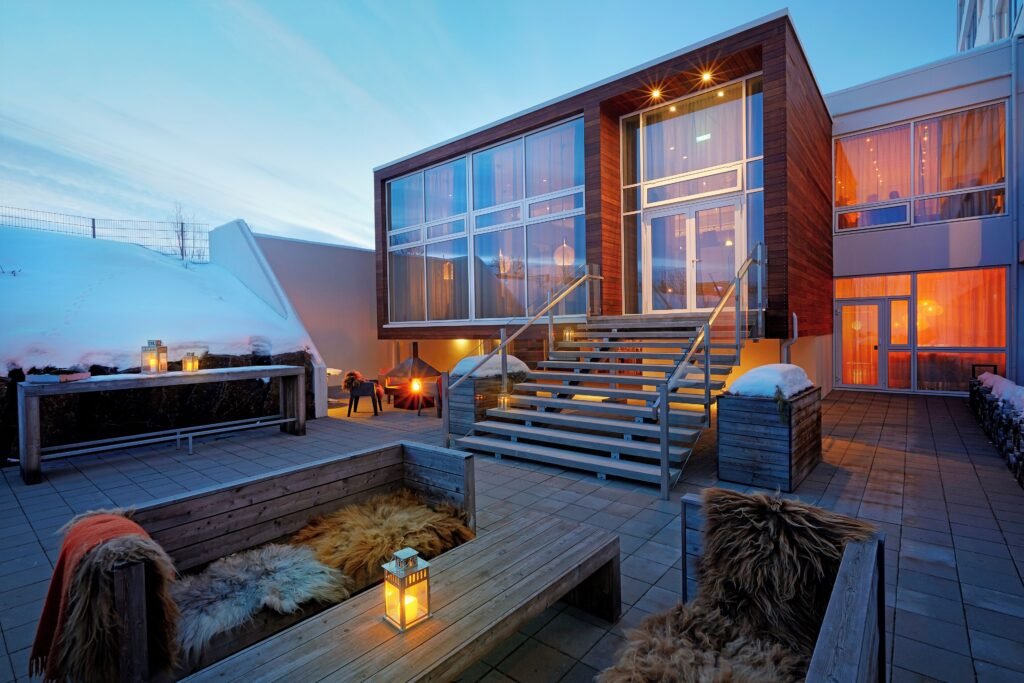
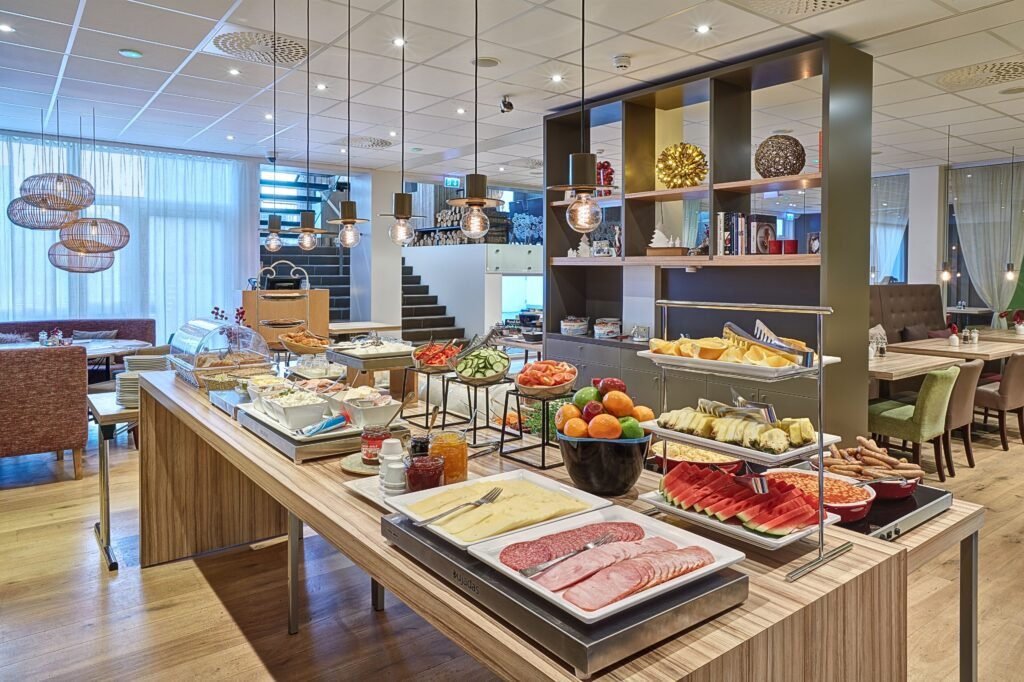
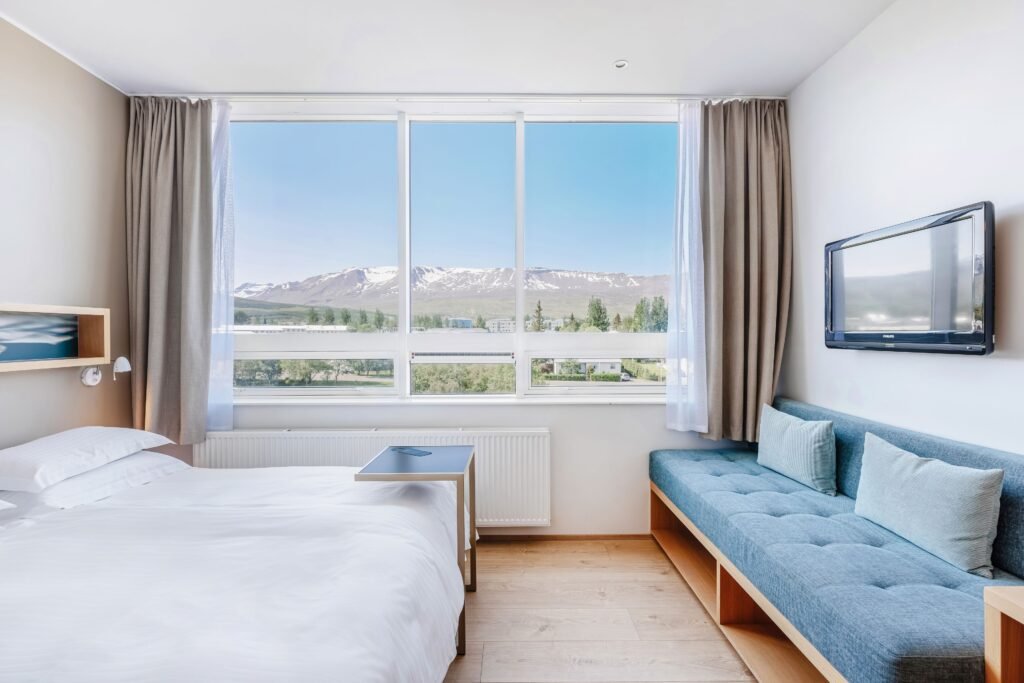
Our base was Berjaya Akureyri Hotel, perched high on a steep hill above the town. From here, the view opens toward the surrounding mountains and nearby ski slopes, especially dramatic in winter light. The climb up the hill is noticeable — but the reward is absolute calm and wide‑open perspective.
Right next to the hotel is an outdoor geothermal swimming complex with six pools, all heated naturally to temperatures between 37–40°C. Slipping into warm water while cold air bites your face is one of those moments that immediately explains Icelandic culture. A single visit costs around 1400 ISK per person, and it feels less like a spa and more like daily life.
K16 Apartments offer a more independent stay right in the heart of Akureyri, with modern interiors and a strong sense of privacy. These apartments are well suited for longer stays or travelers who prefer a “live like a local” experience, with cafés, bakeries, and the harbor just steps away. The minimalist Nordic design reflects the calm and practical lifestyle of North Iceland.
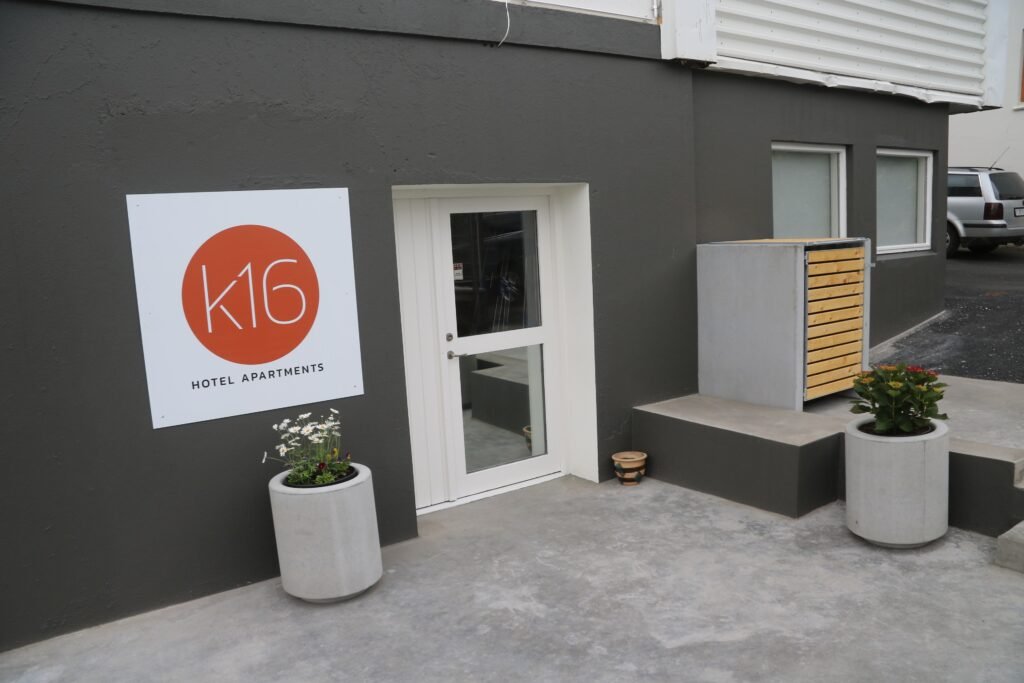
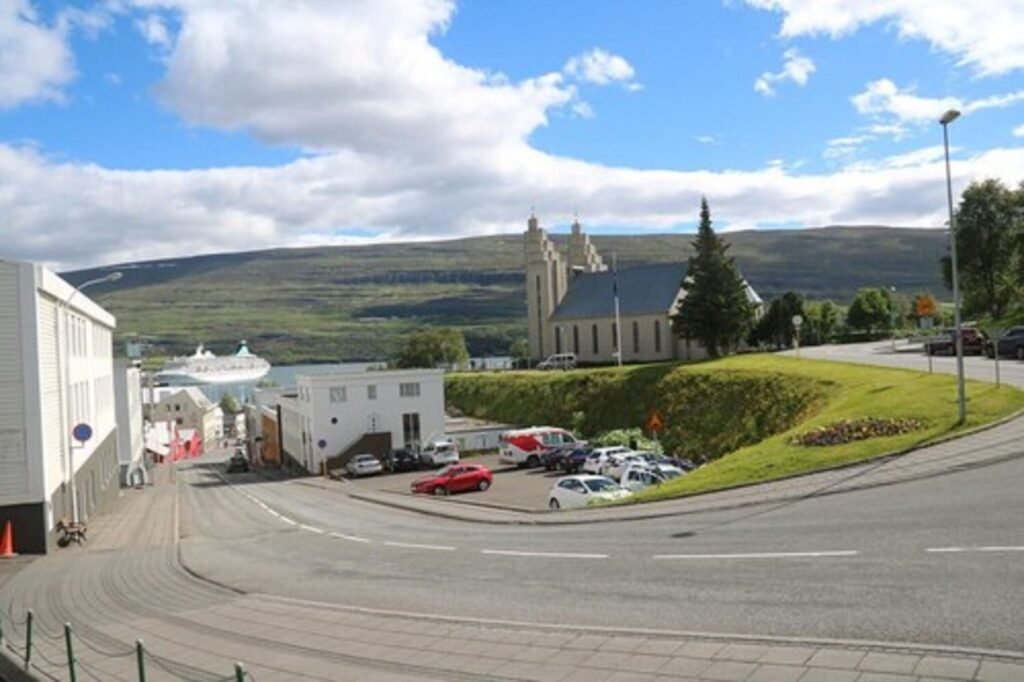
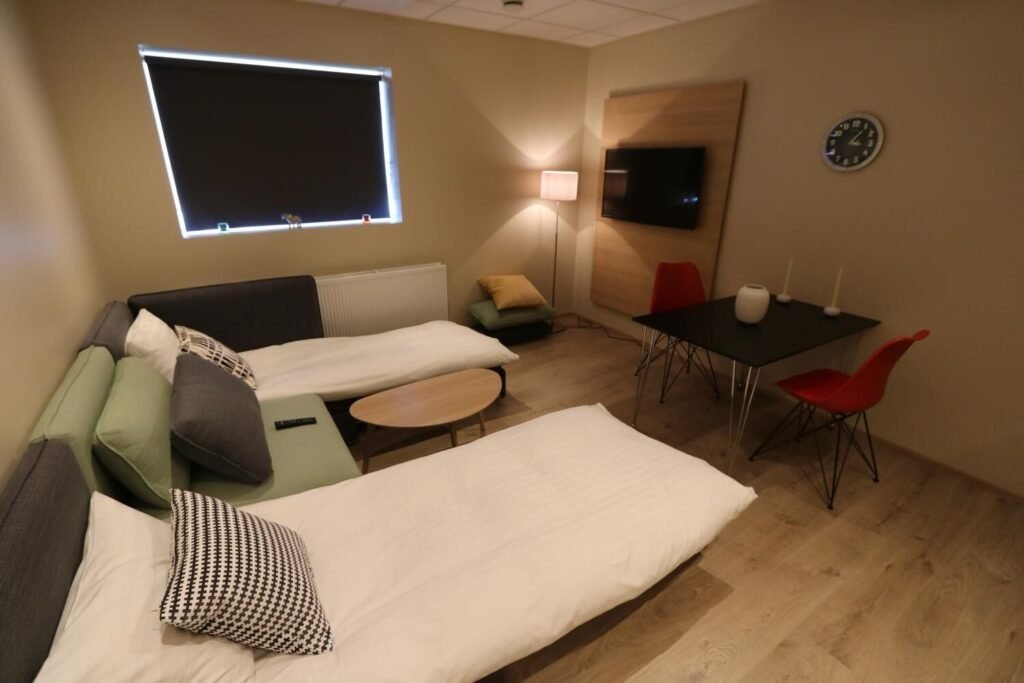
➡️ Best for: self-catering stays, longer visits, and travelers who value space and flexibility.
Akureyri Hotel is a modern and comfortable option located within 10 minutes easy walking distance of the town center. It’s a practical choice for travelers who want clean design, reliable comfort, and quick access to restaurants, shops, and the waterfront. Ideal for short stays, city exploration, and travelers who prefer functionality over resort-style accommodation.
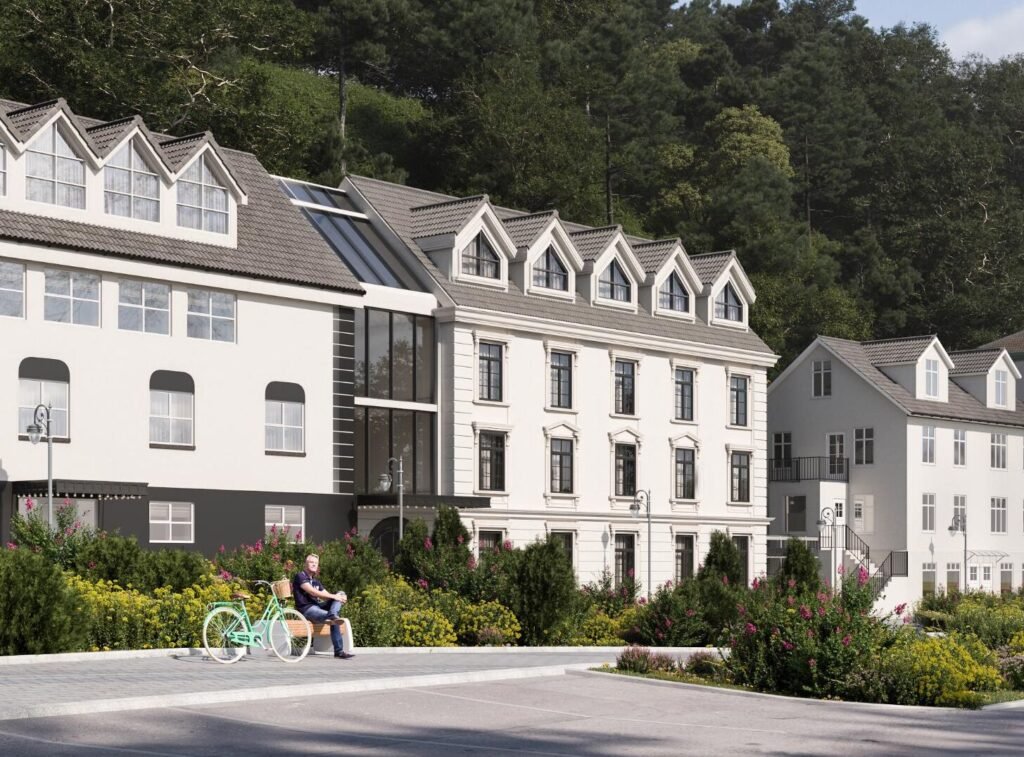
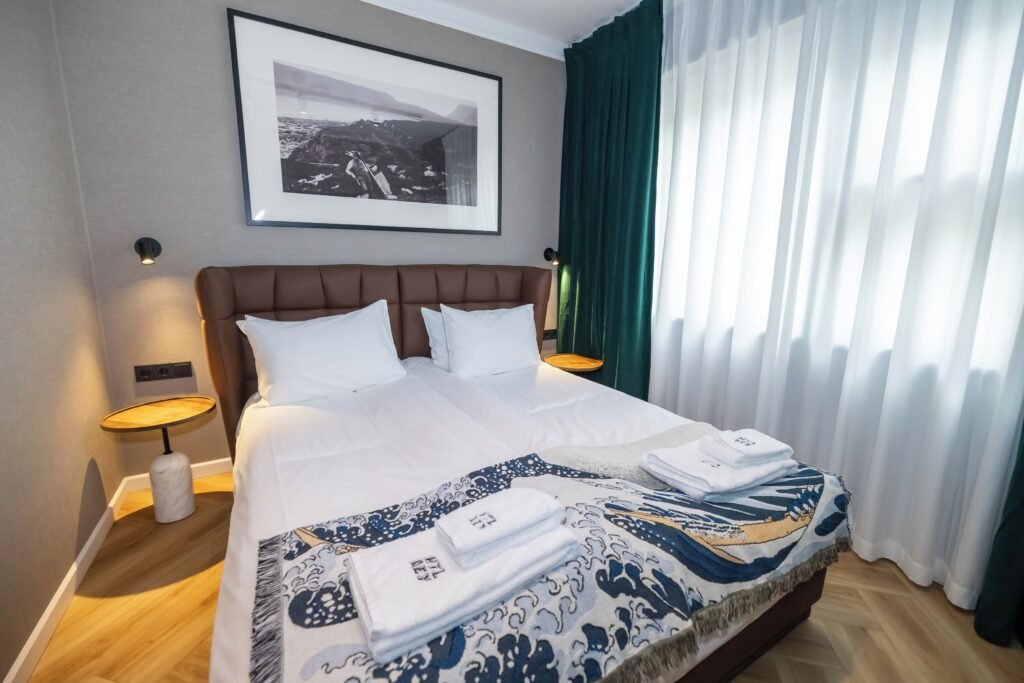

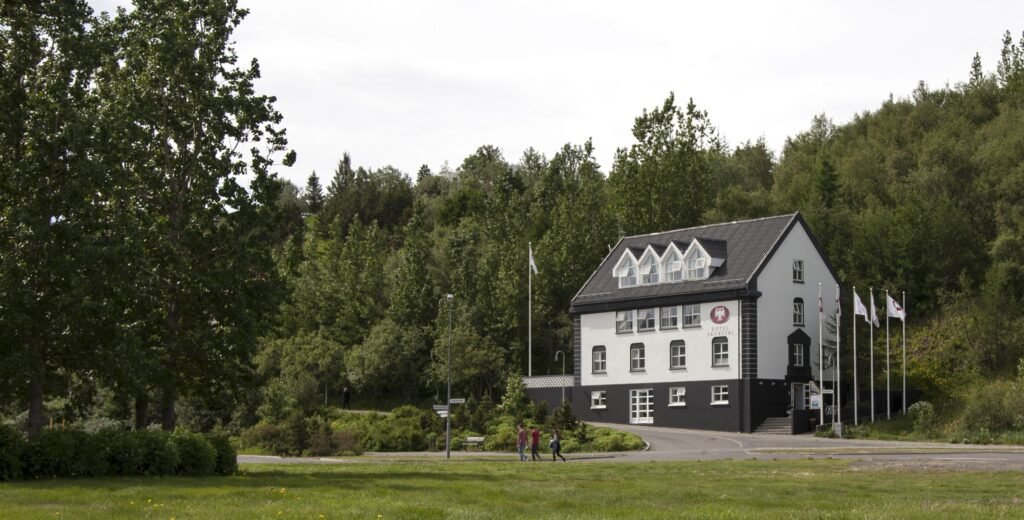
➡️ Best for: central location, convenience, and easy access to Akureyri’s main attractions.
KEA Hotel Akureyri is ther excellent options in Akureyri, close to the waterfront and green spaces, and in the very center of town, in best location possible, close to everything worth visiting in Akureyri. — ideal if you want everything at your doorstep. Great back pakers bar a 2 minute walk away and just 30 seconds from the most famost restorant here Rub 23, with a wide selection of fish and a large selection of sushi dishes, mixed with meat dishes.
The evening ended without plans. No rushing. Just watching the light fade over the fjord and understanding that Akureyri doesn’t demand attention — it invites patience. In North Iceland, daily plans often depend on weather and visibility, so checking Icelandic weather and aurora forecasts is essential.
Day 2 – Waterfalls, Traditions, and Geothermal Rituals
North Iceland mornings are slow, not because there is nothing to do, but because the landscape encourages you to move with intention. After breakfast, we set out toward one of the region’s most iconic natural landmarks.
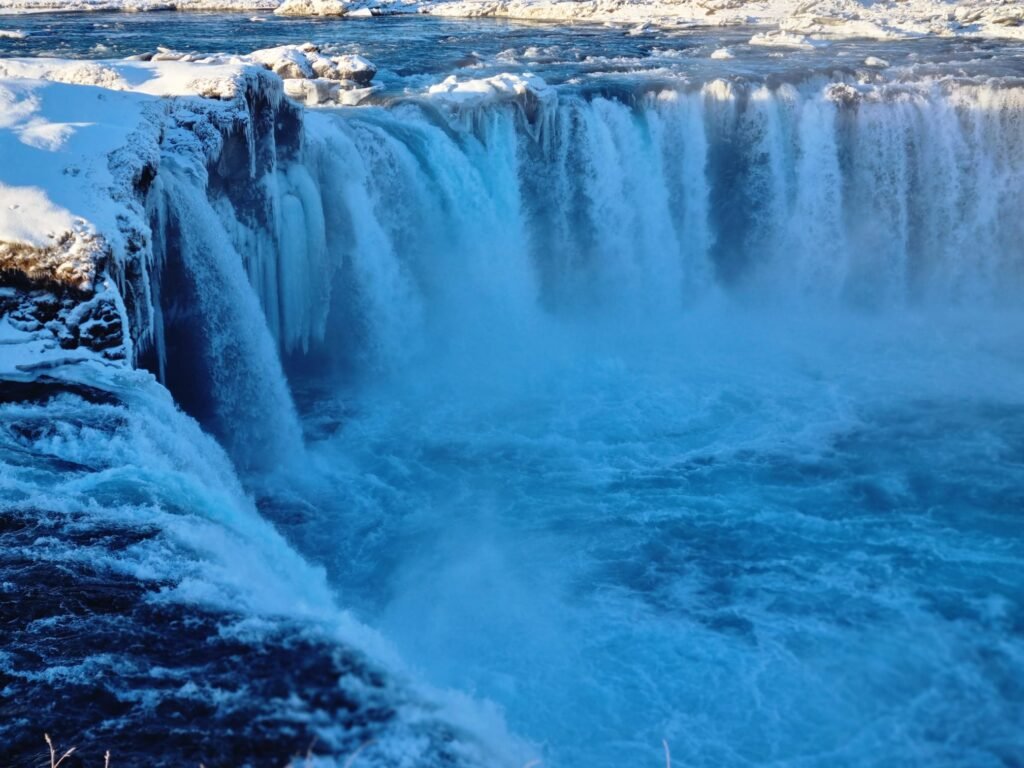
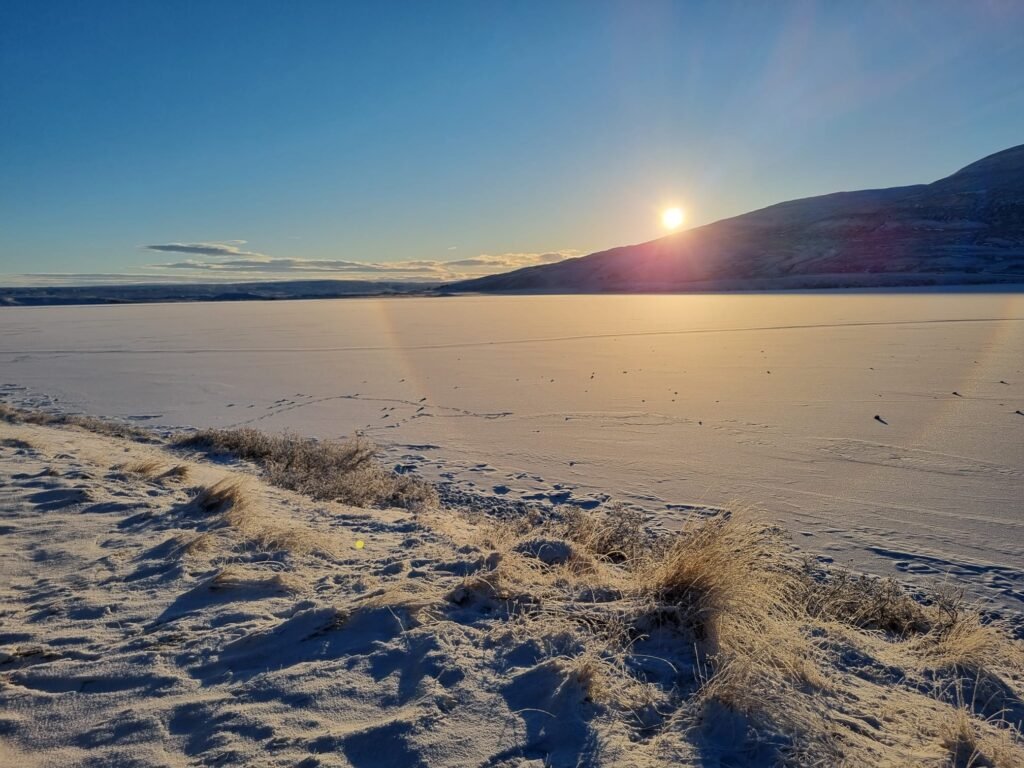
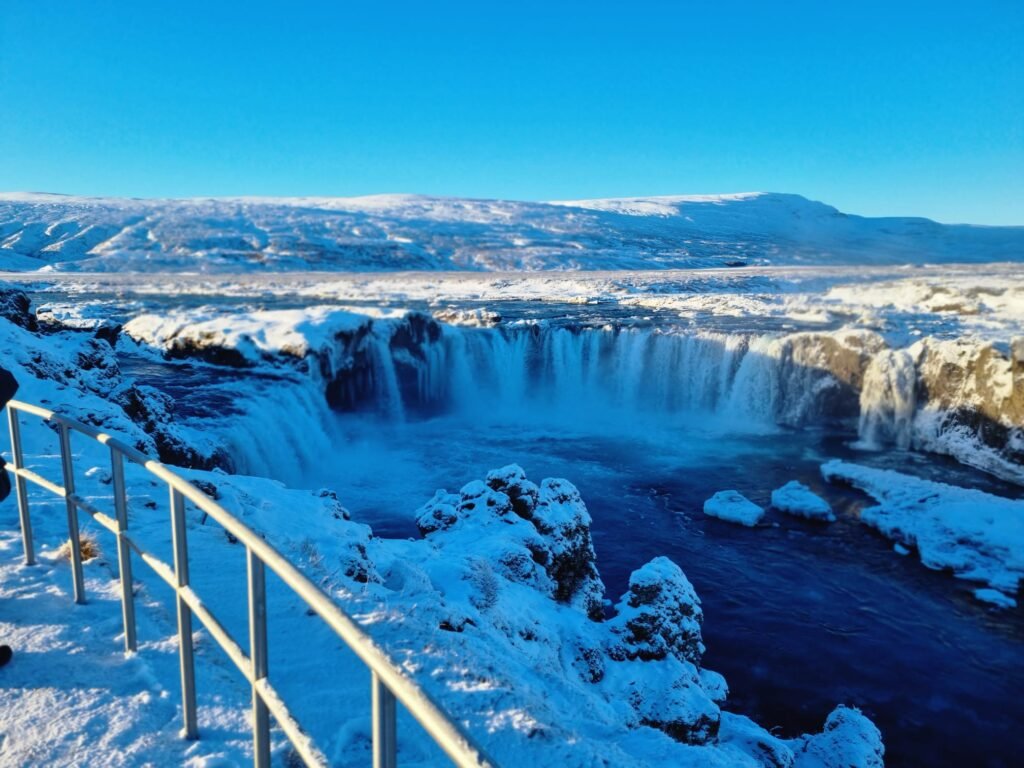
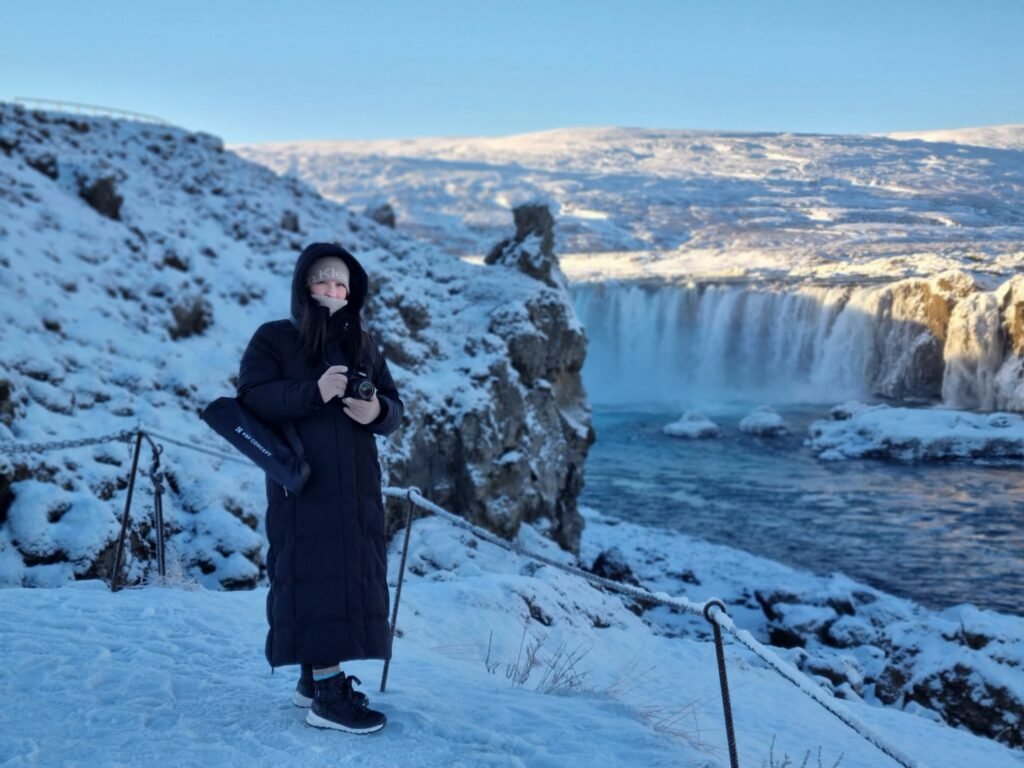
Goðafoss Waterfalls – The Waterfall of the Gods
Goðafoss is not the tallest waterfall in Iceland, nor the loudest. What makes it powerful is presence. Even in winter, partially framed by ice and snow, it carries weight — historical and emotional.
Standing there, watching water curve and crash in a wide horseshoe, you feel how deeply nature and belief are intertwined in Icelandic history. This is a country where stories are attached to places, not monuments.
Christmas House – A Pause for Joy
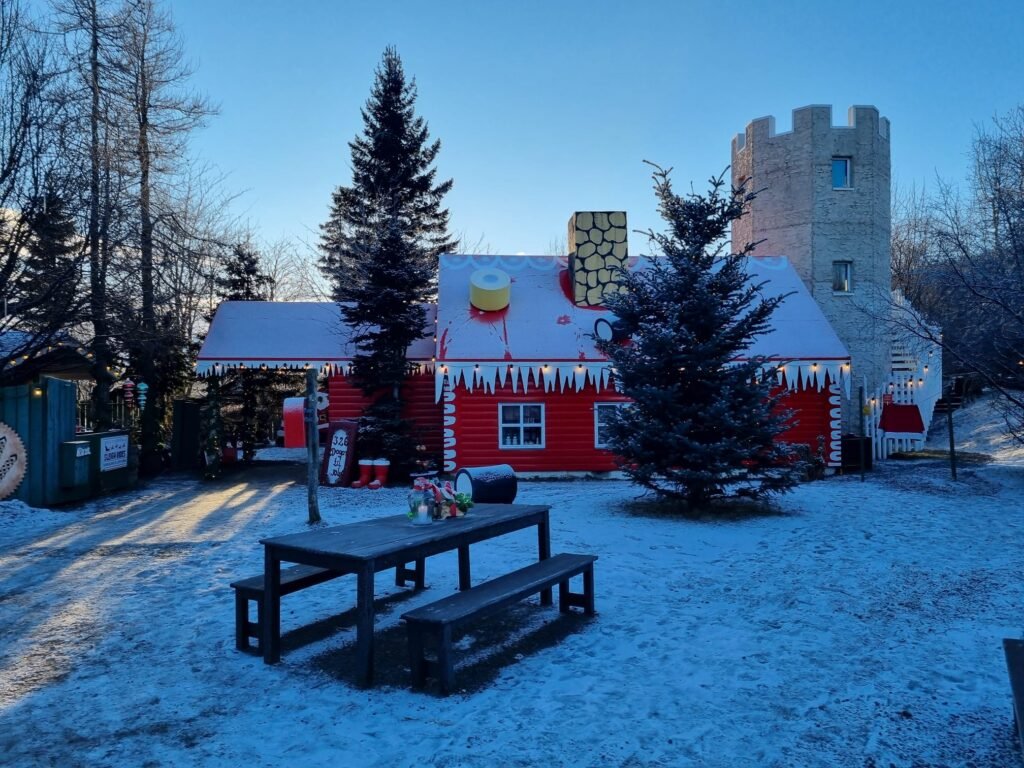
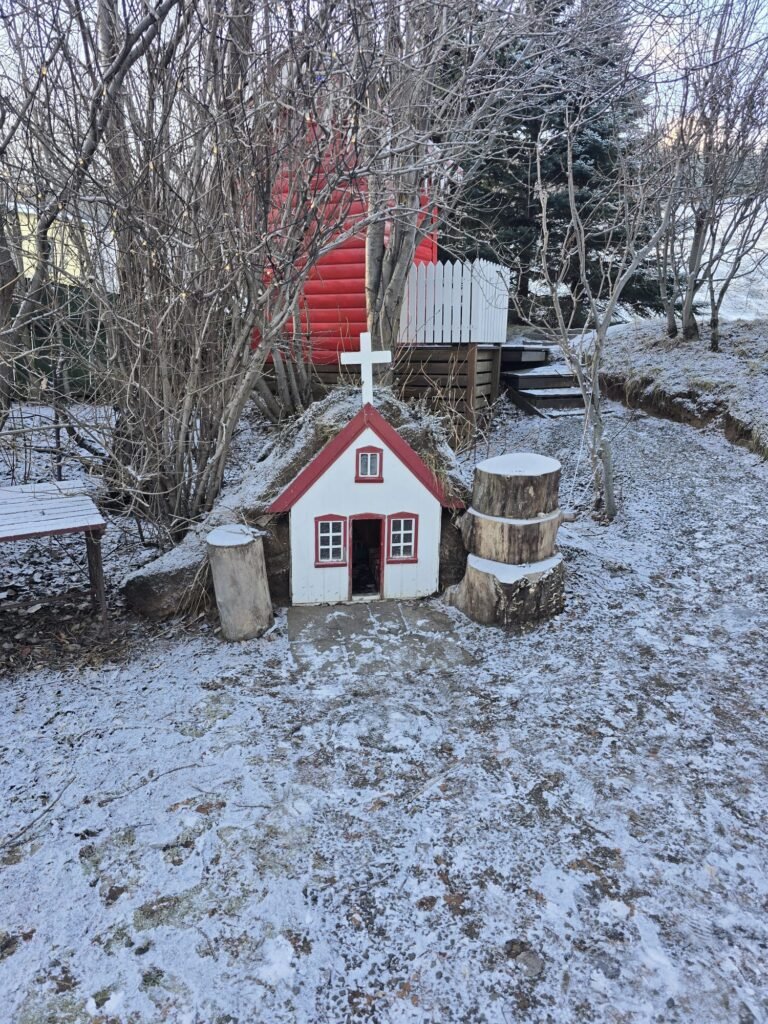
On the way back, we stopped at the Christmas House — an unexpected but charming detour. Somewhere between nostalgia and comfort, it reminded us that even in a land shaped by glaciers and volcanoes, warmth and tradition matter.

Forest Lagoon – Where Time Slows Completely
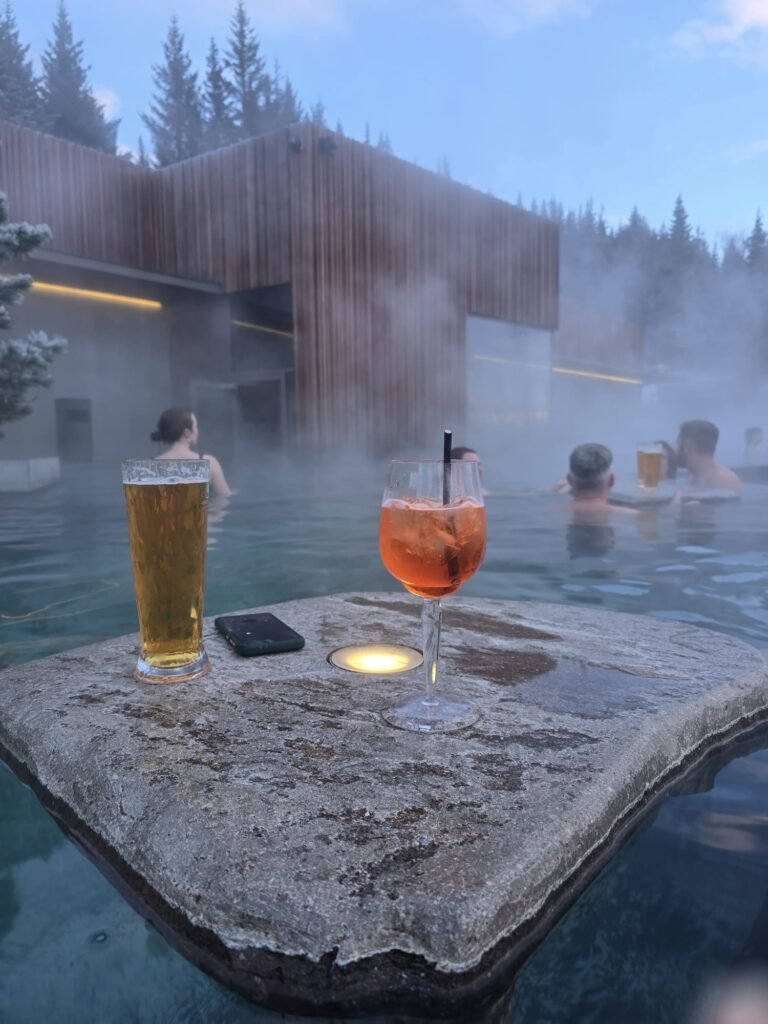
The highlight of the day was Forest Lagoon, located just 6–7 minutes by car from Akureyri, or around 25–30 minutes on foot. Tucked into woodland overlooking the fjord, it feels intentionally hidden.
Hygiene standards here are exceptional — something Iceland takes very seriously. The design blends seamlessly into the natural surroundings, and the atmosphere is calm rather than theatrical.
Forest Lagoon deserves more than a passing mention. Its design philosophy reflects a distinctly northern approach to wellness. There are no excess decorations, no dramatic soundtracks, no forced luxury.
Instead, the lagoon is carved into the natural forested slope overlooking the fjord. Wooden walkways, clean lines, and muted tones allow the surroundings to remain the focus. Steam rises slowly into cold air. Snow muffles sound.
What stood out most was the discipline around cleanliness and flow. Entry routines are strict, yet calmly enforced. Everything feels intentional. Respect for shared space is non-negotiable.
This balance — between comfort and restraint — felt deeply Icelandic.
Floating in geothermal water, surrounded by snow‑covered trees, I understood why hot pools are not a luxury here — they are a necessity. This is how people reset. How they survive long winters. How they connect.
Inside the lagoon, we tried one of the best traditional lamb soups I’ve ever had. Rich, warming, deeply nourishing. Food in the North isn’t about complexity — it’s about purpose.
Touring with Local Knowledge
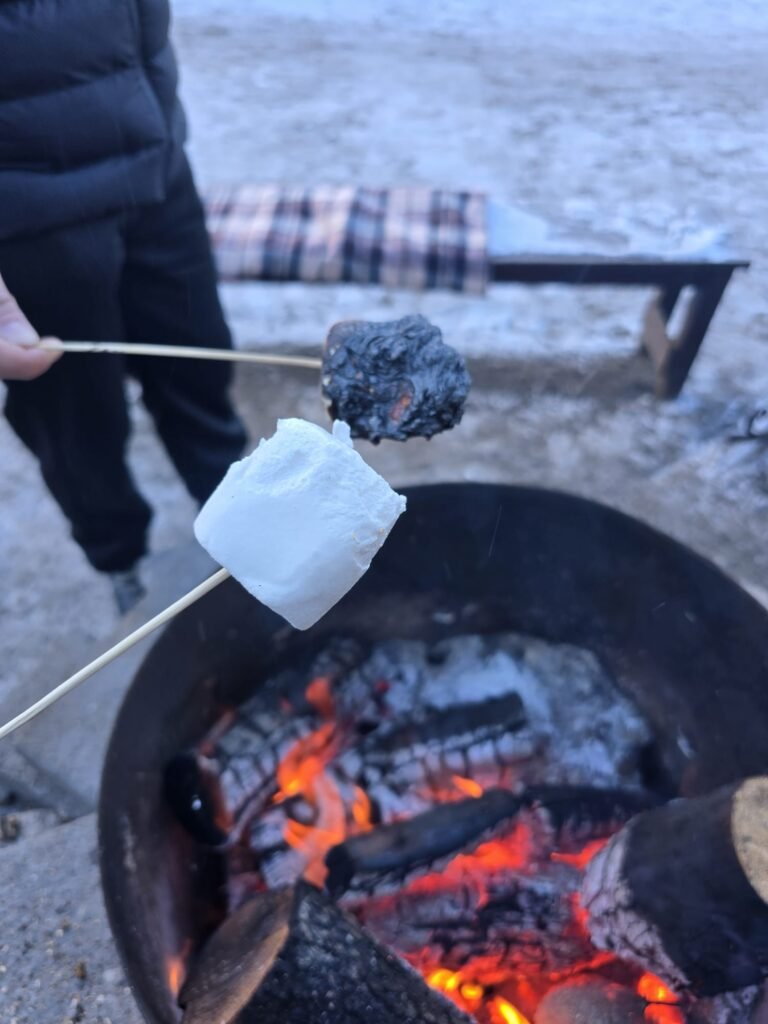
For the day’s excursions, we chose a local company, The Travel Vikings. Their approach felt grounded and respectful — no rushing, no forced schedules. In North Iceland, timing belongs to weather and light, not to people. Our guide Ingy was exceptionally knowledgeable about the history, geology, and cultural heritage of the region. Throughout the day, we learned about ancient settlement routes, volcanic activity that shaped the landscape, and local traditions passed down through generations. He pointed out places we would have otherwise driven past, sharing lesser-known facts and stories that added real depth and context to everything we saw. The experience felt authentic, personal, and deeply connected to the land.
That evening, as we drove back toward Akureyri, our guide began sharing stories that felt as ancient as the landscape around us. Somewhere between the snow-covered mountains and the quiet fjord, we realized that Christmas in Iceland is nothing like the one most of us grew up with.
Here in the North, winter traditions were never meant to be cheerful decorations. They were tools for survival. Stories told in the dark to explain fear, discipline children, and help communities endure months of cold and isolation.
It was then that we learned about Grýla — the mountain troll said to descend during winter — and her thirteen sons, the Yule Lads, who arrive one by one in the days leading up to Christmas. Each carried a personality shaped by scarcity: stealing food, licking spoons, slamming doors. In a land where nothing could be wasted, even folklore reflected daily life.
The guide explained that these stories were not invented to entertain, but to teach. To warn. To remind people that winter was not a season to challenge, but one to respect. Listening to him, surrounded by Arctic silence, it became clear why these legends still matter — they belong to the landscape itself.
This understanding made our visit to the Christmas House feel entirely different. What first appeared playful — shelves of candies, jams, marshmallows, and sweets — revealed deeper roots. Much like the story of Hansel and Gretel, temptation and comfort hid darker origins. Fear had simply been softened over time, transformed into tradition.
In North Iceland, folklore is not a performance for visitors. It is a quiet inheritance. A reminder that nature has always set the rules — and people learned to live within them.
He also told us about the darker side of Icelandic Christmas folklore — the Yule Cat (Jólakötturinn), a giant mythical creature said to roam the countryside during winter, devouring anyone who did not receive new clothes before Christmas. The story dates back to farming communities, where new clothes symbolized hard work completed before winter. These stories, half playful and half cautionary, reveal how deeply Icelandic traditions are rooted in survival, nature, and the long, dark Arctic winters.
Day 3 – Whales, the Fjord, and the Edge of the Atlantic
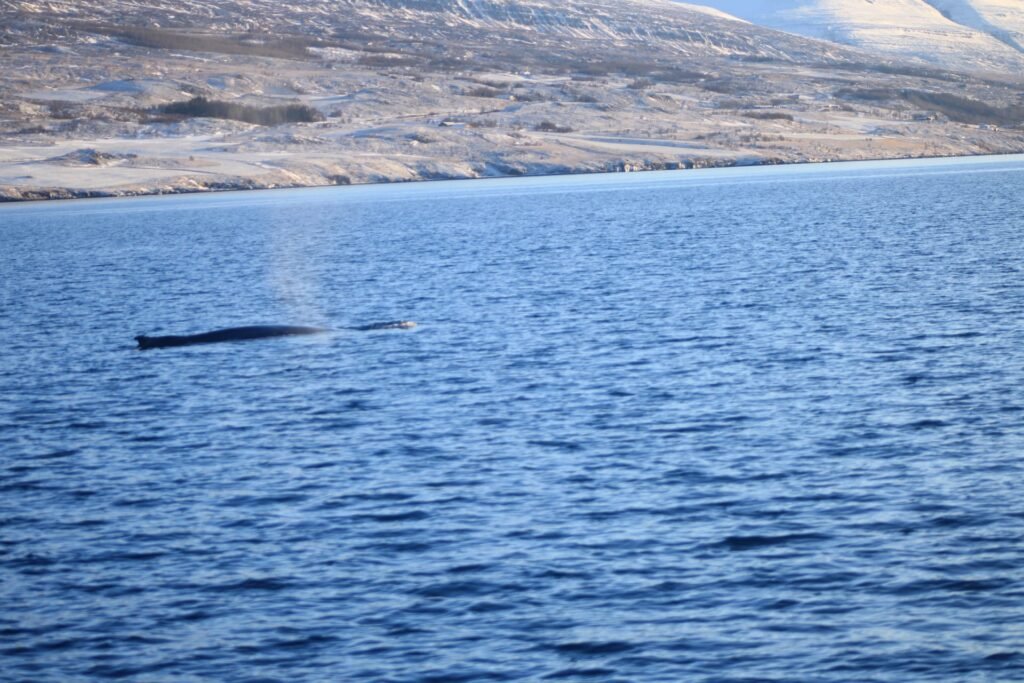
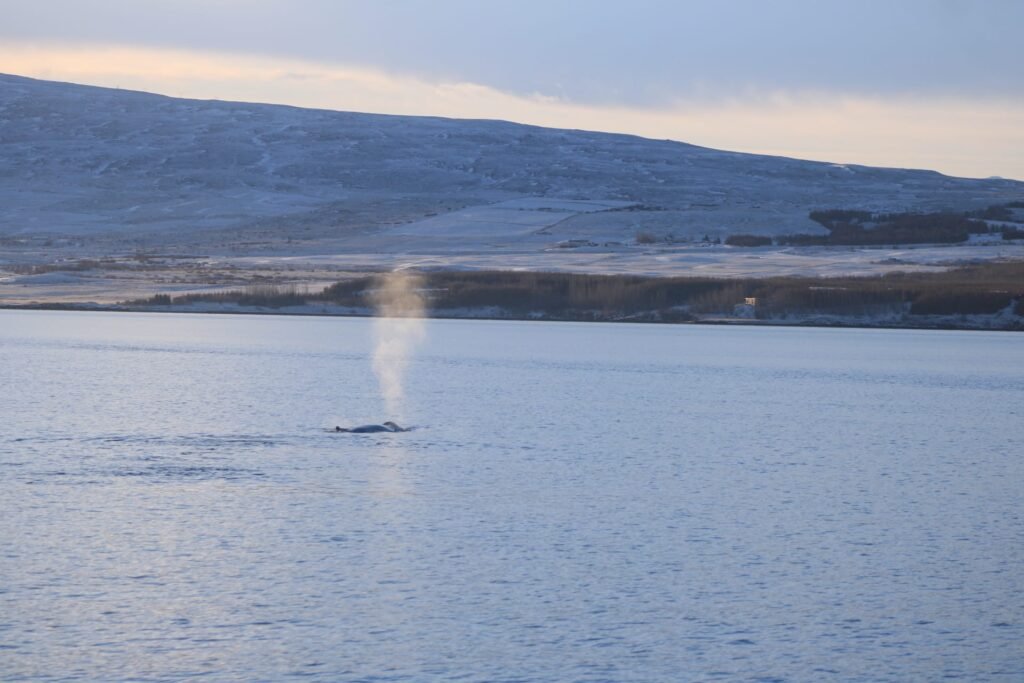
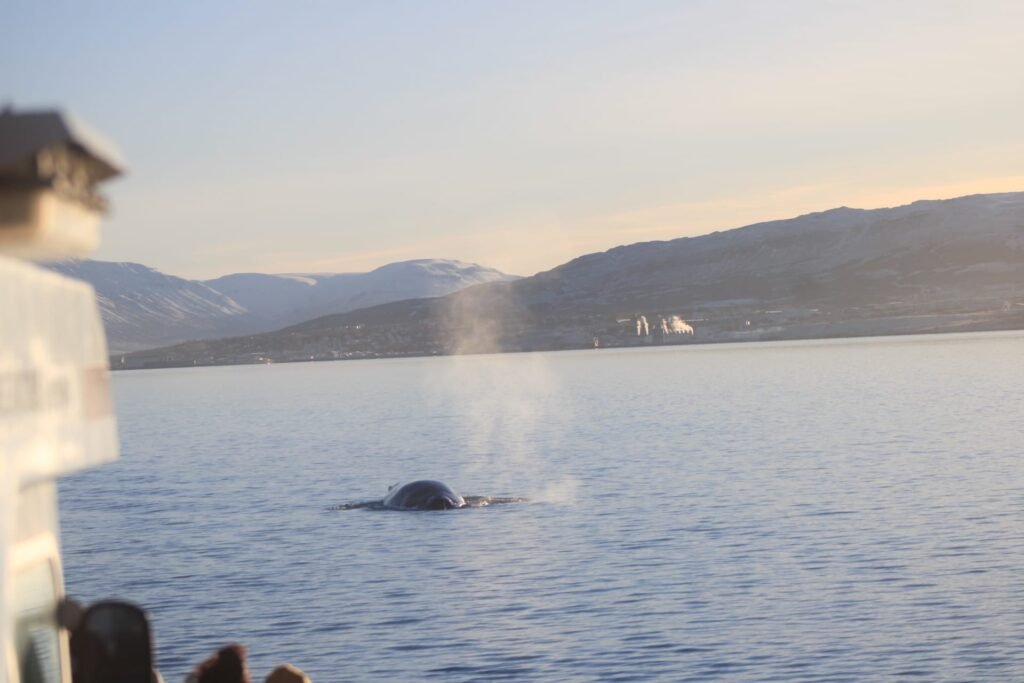
The final day took us back to the water — this time not to soak in it, but to observe what lives beneath.
Whale Watching in Eyjafjörður
Eyjafjörður is one of Iceland’s most reliable areas for whale watching, especially for humpback whales. These cold, nutrient‑rich waters support life year‑round, and sightings are common.
As we moved through the fjord toward the open North Atlantic, the scale of the landscape became even more apparent. Mountains fell away. The horizon widened. The silence deepened.
Seeing whales surface in these waters doesn’t feel like a performance. It feels accidental. Like being allowed to witness something ancient and ongoing.
Whale watching from Akureyri does not feel like an excursion — it feels like an extension of the fjord itself. The waters of Eyjafjörður remain ice-free year-round, allowing marine life to thrive even in winter.
Humpback whales are the most frequent visitors, known for their curious behavior and dramatic surfacing. Seeing them emerge against a backdrop of snow-covered mountains reinforces how interconnected this ecosystem truly is.
The experience is never guaranteed. Some days offer multiple sightings; others offer none. This uncertainty is part of the respect locals hold for nature — nothing is promised.
Living by Nature’s Rules
What stayed with me most after these three days wasn’t a single sight or activity. It was the way people live here.
In this part of the world, nature sets the agenda. Weather decides plans. Light dictates rhythm. The land is not something to conquer or redesign — it is something to respect.
Akureyri doesn’t sell itself loudly. It doesn’t promise transformation or thrill. Instead, it offers something rarer: alignment.
Between fjords and lagoons, mountains and warm water, whales and quiet streets, life here feels reduced to what matters. And once you experience that, it’s hard not to carry it with you when you leave.
This is the North. And it stays with you.
Life Above the Arctic Circle: More Than a Destination
Spending more time in North Iceland made one thing very clear to me: Akureyri is not a place you rush through. It’s a place you settle into. The Arctic Circle may sound dramatic on a map, but here it translates into something subtle — longer twilights, softer light, and a sense that time stretches differently.
Unlike the south of Iceland, where iconic sights compete for attention, the north feels quieter and more intimate. Distances are longer, towns are fewer, and the relationship between people and nature is far more visible. Roads close without warning. Weather changes plans. And everyone accepts that this is simply how things are done.
This mindset shapes everything — from architecture and food to social life and daily routines.
Akureyri’s Arctic Geography and Climate
Akureyri sits at the innermost point of Eyjafjörður, Iceland’s longest fjord, stretching nearly 60 kilometers inland. This geography protects the town from the harshest coastal winds, creating a surprisingly stable microclimate compared to other northern settlements.
Winters here are cold, but often calmer than expected. Snow settles gently instead of being driven sideways. Summers bring long daylight hours, cool temperatures, and an almost meditative stillness.
Locals measure seasons less by calendar dates and more by light, snowpack, and road conditions. The concept of “bad weather” feels irrelevant — there is only weather you adapt to.
In your Akureyri Iceland travel guide, food and storytelling go hand in hand.
Geothermal Life in the North
Geothermal energy is not an attraction in Akureyri — it is infrastructure. Hot water flows directly into homes, schools, swimming pools, and sidewalks. In winter, heated pavements melt snow automatically, allowing daily life to continue uninterrupted.
Public swimming pools are social hubs. Elderly locals, families, teenagers, and visitors all share the same spaces. Conversations happen in hot tubs. News is exchanged. Silence is also respected.
What stood out most was the discipline around cleanliness and flow. Entry routines are strict, yet calmly enforced. Everything feels intentional. Respect for shared space is non-negotiable.
Traditional Dishes You Encounter in the North
Northern Icelandic cuisine is born from necessity. Historically, this region relied on what could be preserved, fished, or raised locally. That legacy remains visible today, even in modern restaurants. At Rub23 we experienced some truly outstanding meat specialties, prepared with precision and strong attention to quality. The lamb was exceptionally tender, rich in flavor, and perfectly balanced with seasonal sides. The kitchen clearly operates at a high standard.
It’s also worth noting that in Akureyri tipping is not mandatory and generally not expected. Service charges are included in prices, so leaving a tip is entirely optional and based purely on personal appreciation.
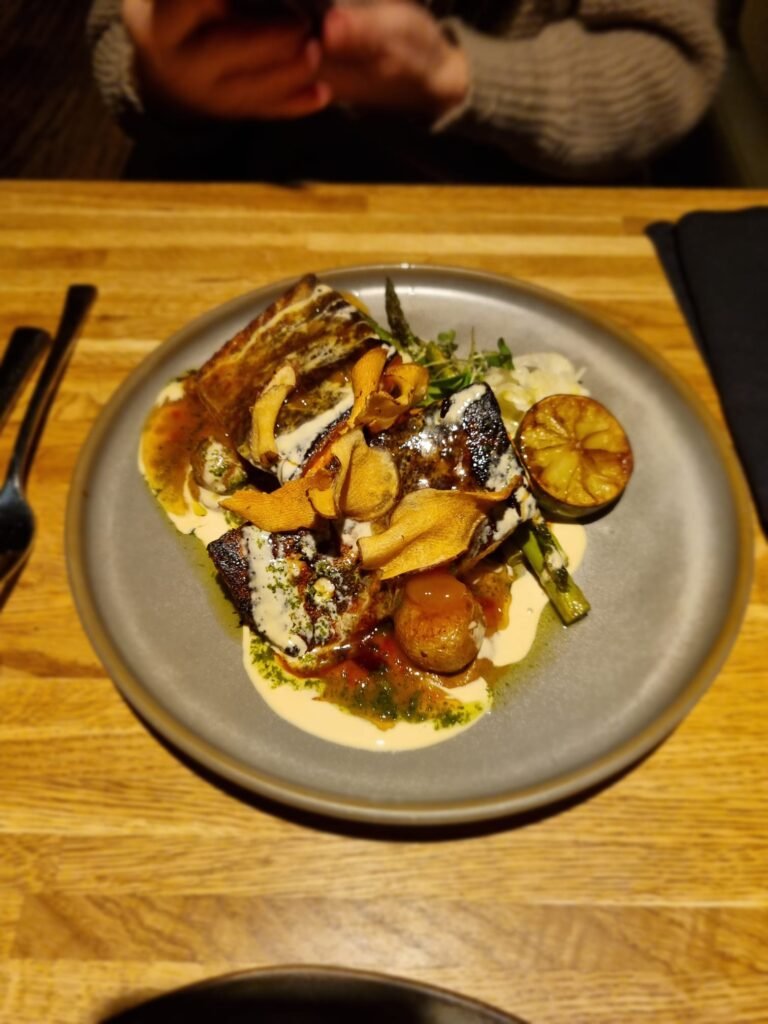
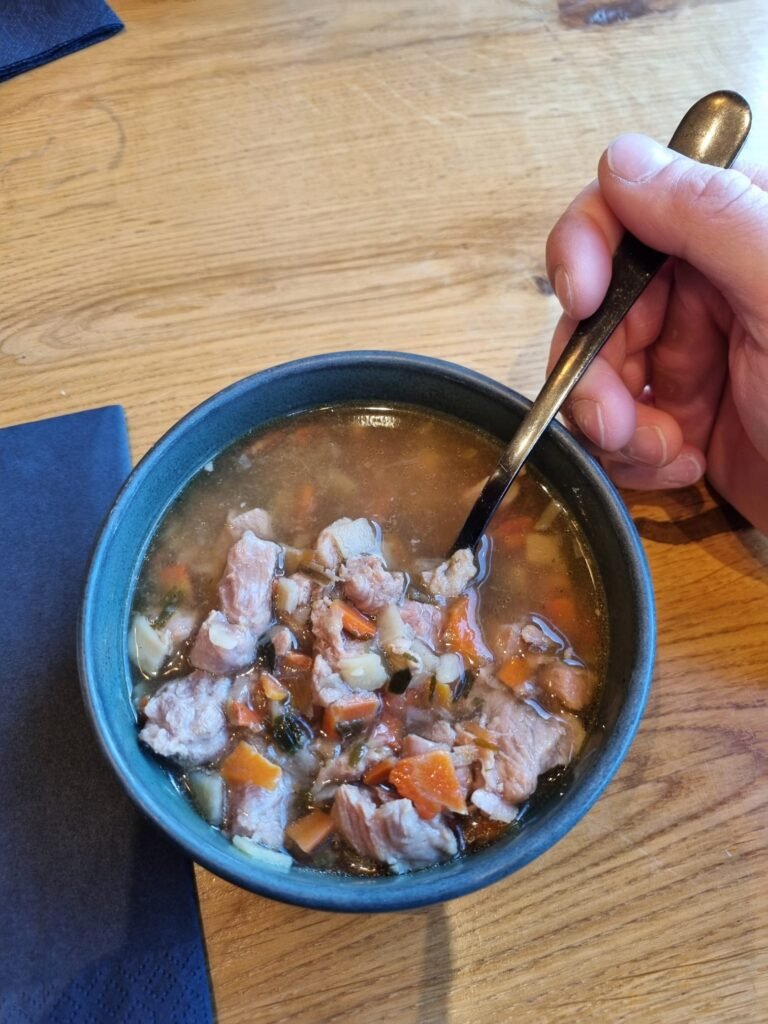
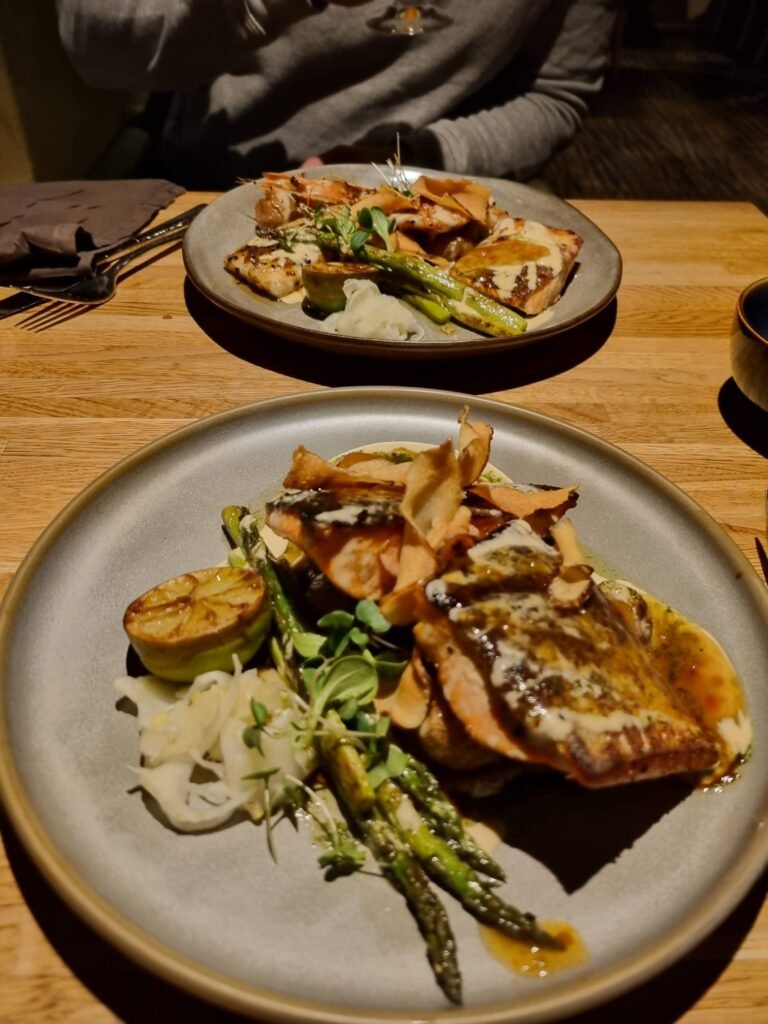
- Lamb Soup (Kjötsúpa): More than a dish, this is cultural memory in a bowl. Slow-cooked lamb, root vegetables, and herbs create something deeply grounding.
- Arctic Char: A cold-water fish with a clean, slightly sweet flavor. Often pan-fried or grilled, sometimes paired with subtle sauces. In short: if salmon feels too intense and trout too plain, Arctic char sits perfectly in between.
- Cod: Firm, mild, and treated with respect. Rarely over-seasoned.
- Salmon: Frequently prepared with Nordic or light Asian influences.
- Fermented and cured fish: Less common for visitors, but still part of traditional foodways.
Meals are filling rather than flashy. Portions are generous. Presentation is secondary to warmth and nourishment.
Architecture and Human Scale
Buildings in Akureyri are practical and human-scaled. Bright colors break long winters. Roofs are steep. Materials are chosen for endurance rather than aesthetics.
There are no skyscrapers. No unnecessary monuments. Everything feels proportionate — a town built to support life, not to impress.
Walking through residential areas revealed how closely people live with their environment. Storage sheds for winter gear. Windows designed to capture limited light. Streets that prioritize safety over speed.
Final Thoughts and Why the North Stays With You
After three days, I realized Akureyri had quietly recalibrated my sense of pace. There was no moment of spectacle that demanded attention. Instead, the accumulation of small experiences created something lasting.
Warm water under falling snow. Silence broken only by wind. Food that comforts rather than dazzles. Wildlife that appears on its own terms.
In this part of the world, humans are not the main characters. And strangely, that is exactly what makes the experience so powerful.
Akureyri doesn’t ask you to change. It simply invites you to listen.
Traveling to North Iceland is not about ticking boxes. It’s about understanding balance — between warmth and cold, light and darkness, movement and stillness.
Akureyri stands as a reminder that life can be shaped around nature without conflict. That adaptation can replace control. And that sometimes, the most meaningful journeys are the quietest ones.
Between fjords and lagoons, this is life — northern, honest, and deeply human.
Final Note
This post contains affiliate links. If you choose to book through them, I may earn a small commission at no additional cost to you. I only recommend places and experiences I have personally tested and genuinely stand behind.
Read next: Best Things to Do in Akureyri, Iceland